
https://boardgamegeek.com/geeklist/197599/second-irish-math-trade-geeklist/page/1?
Limerick gaming, have organised another Mat Trade for Gaelcon. Jump on it and swap out your unwanted games
Huzzah!
Vic
Boardgames, Card Games, Gaming
https://boardgamegeek.com/geeklist/197599/second-irish-math-trade-geeklist/page/1?
Limerick gaming, have organised another Mat Trade for Gaelcon. Jump on it and swap out your unwanted games
Huzzah!
Vic

“You’ve NEVER played Catan? NEVER? and neither has your brother…. Ok let’s fix that”, thus i found myself playing Catan after quite a break from it.
Settlers of Catan is a classic game which is shockingly knocking on twenty years of age. Catan was like the Dune II of Boardgames. It was new. It was fresh and if kickstarted a new genre into life. Catan is still a great game. It’s aged well. If you haven’t played it. It’s definitely worth a go. Actually if you consider yourself a gamer it’s your duty to play it. It’s patriotic.

Catan sees you and three chums trying to get to ten points first, so it’s a race game. It has you building settlements and roads on a map, so it’s a conquest game. You need to trade resources to get the ones you want so it’s a trading game. It’s got sheep in there and wood so it’s a great setup for jokes game
If you haven’t played this game it’s pretty straightforward. A random spread of five possible typed and numbered hex tiles makes up the map. You setup your starting settlements on the edge of them so each of your bases is at the nexus of up to three tiles. Each turn you roll two dice and the corresponding numbered tile pays out to whomever is next to it.

These resources when you have the right combos can be exchanged for roads, settlements, cities or cards. The bigger your civilization the more points it’s worth. First to ten wins.
Bonuses come from having the longest road or the most soldiers. Oh and let’s not forget the robber. Roll a seven when you’re seeing which spots pay out and you get to move the robber who zooms in like an unwelcome relative and sets up shop in one spot shutting it down until another seven is rolled. (he also has a nasty hand size reduction trait you’ll come to hate)
There’s surprisingly good opportunities to block other players and generally cause mayhem. I forgot how much cursing and swearing accompanies this game as you’re THIS close to winning and someone micturates on your plans.
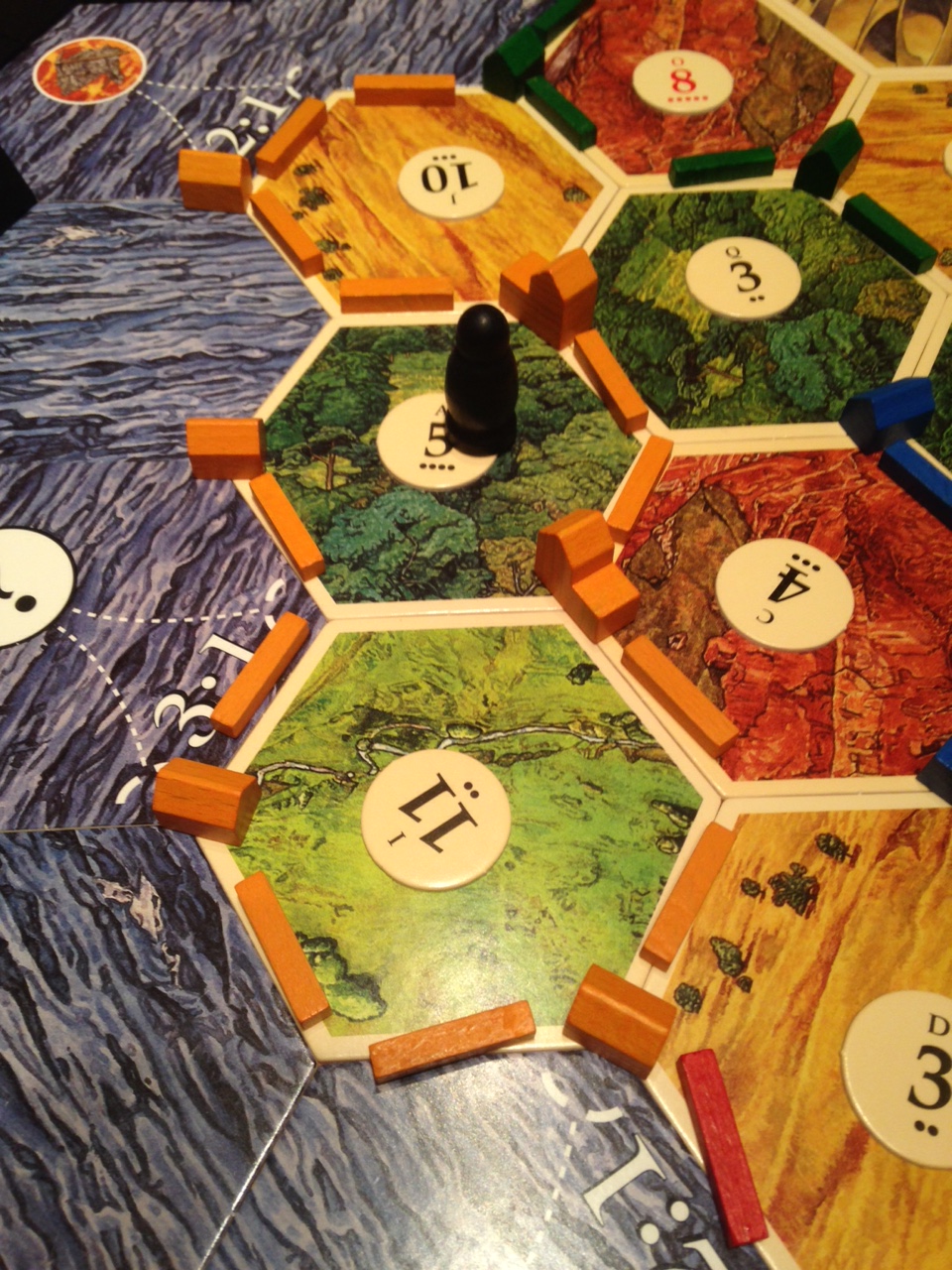
This is rightly a classic game. It hasn’t aged badly. It’s still balanced. Some people complain that there’s luck involved but I disagree. Roll a dice enough times and it events out. There’s real skill here in negotiating and out thinking your opponents to a win. A great game always worth a play
Huzzah!
Vic
Quarter Master General is a great game. It’s a map conquest game. It’s fast. It’s easy to learn. It’s a barrel of monkeys fun. The expansion Air Marshall is good. It’s more of the same. It’s not essential but it does add something. To be exact planes.
Air Marshall introduces airplanes to the proceedings which… don’t act the way you think they would. You were expecting dakka dakka? Sorry try sacrificial meat shield.
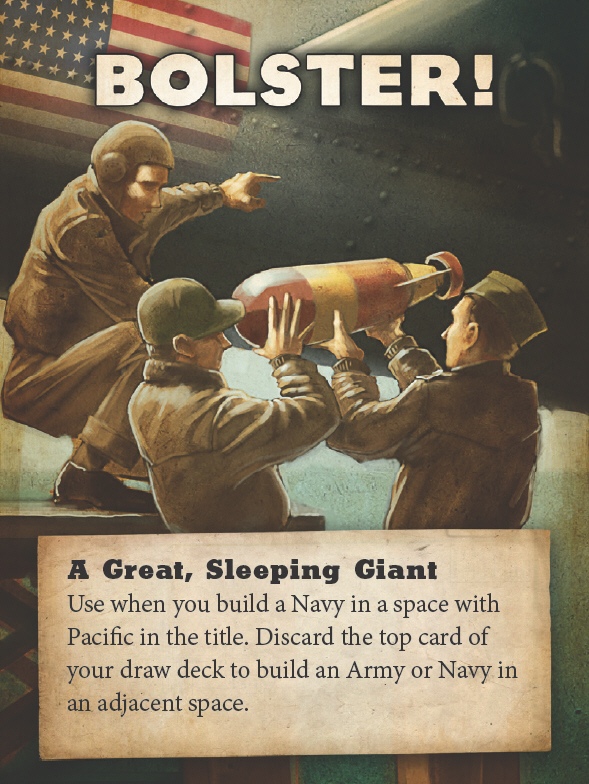
Planes can jump in, take one for the team, lookout sir style if they’re cohabiting army is about to get blasted or they equally can jump in and remove enemy air support. A few of the new cards allow actions on sectors next to or containing planes too. Again like the base game you’ll really need to play through each faction to see what’s in the post for you during a game.

Air Marshall adds about a dozen cards to each deck which makes it more difficult to run your opponent out of cards but also opens players up to dumping more and not being as tied to the whim of the deal gods.
The game also introduces bolster cards. These are reactions (in some cases) and can be played directly from your hand as a reaction to someone else’s move or else cards that play out of sequence and setup a chain of plays. They’re interesting. Certainly way more interesting than reaction cards, which I found were a bit of a waste in the base game. That said I’ve never won as the Axis so what would I know.
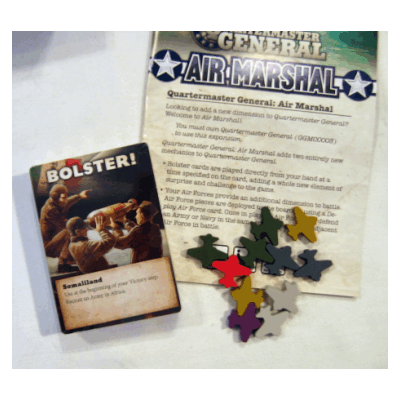
The new cards and planes not only offer new possibilities but also patch the original game and make it harder to go for proven killer combos. It can lead to players turtling which for this game is fine as the base could often feel like a knife fight in a phone box.
All in all I liked this. I think the card play system is solid and I’d like to see Griddly Games use it on another setting for their next game. The only negative I can see with this is games can often feel a little samey, then again this is a semi simulation of an historical event and for me I’m still excited by this game and happy to play it at the drop of a hat
More of this sort of thing
Huzzah!
Vic

Harvey O’Brien runs a regular boardgames night in his house every week, he’s a founding member of the South Dublin BoardGamers, he knows a thing or two about games and he has a beard. I’ve had the pleasure of joining him and his guys for games some time back and they’ve now become regulars at the various Knavecons (which is really just a big games night with lots more people). I caught up with Harvey to ask him a little bit about running a games night and what it’s all about.
Because I enjoy it. It’s fun to meet up with people that enjoy modern gaming and play whatever hits the table. It’s sociable, it’s relaxing, and it’s good for the brain. It’s also generally just good craic. We play a couple of times a week in SDBG. When we started playing as a group, it was just three of us. We played in our homes (and still do), so we’d just rotate hosting week by week. Sometimes it was also simply practical to go from house to house, if someone had a particular game they wanted to play, they’d put it on the table at home before the others arrived, get all set up, etc. As time went by and more people began to join us, it was simplest to keep the three primary venues as a kind of focus. It also meant there was no pressure on anyone else to be a host, particularly when some of our members were in rented accommodation or had housemates or whatever. It also gave the group a solid centre: you’d know that something would happen in one of the three venues at least once a week, and you could just come along and play. Tea and biscuits provided. No crisps… 😉 As time went by, we added more nights, and more types of nights, ranging from what we’d call an ‘open night’ where there’s no fixed game or numbers, just whatever people feel like and whatever accommodated the numbers, to a ‘closed’ night where you had a specific game with a specific number of players required, and then we’d have the ‘epic’ nights where we’d meet on a Friday and play through to the wee hours on Saturday with some big box game like Twilight Imperium or Game of Thrones. These days we still have the three ‘central’ venues, but others do host, particularly those that can only play at the weekend because of family commitments.
Well, that depends on how you define gaming. Modern gaming is one thing, but of course I played all the regular games as a kid. My childhood was spent mostly in West Clare, and I remember many nights in the dark during ESB black outs playing 45 with my family by candlelight. Seriously. The 70s. Actually I had my first taste of modern games with HeroQuest, which I bought in Easons in the late 80s. I quickly swallowed up that whole MB cycle of ‘new’ games, but it was years more before I came across this game called Carcassone and went online to find out what it was all about, where I discovered BoardGameGeek and my eyes were truly opened… It was about a year after that I think I finally connected with Jimmy and Niall and formed SDBG.

Everyone needs to feel welcome and comfortable. We are in our homes, so it’s like welcoming any other guest. It’s obvious, but everyone is there to have fun. Yes, your definition fun varies depending on personality, but that’s part of the balance of hosting. You have to take into account who’s coming and what kind of games or game systems they enjoy, and it’s often a question of bringing out a mix of games that will suit the group. It can be tricky, but we all have a good enough range of games that we can generally find something that works. Depending on numbers, you might break into a few separate games and then swap around, or run some party games like werewolf or Shadow Hunters to get everyone playing together. Sometimes people will want to play old favourites, sometimes they’ll be hungry for shiny new stuff. You’ll generally know from the people coming what games might not be suitable at all, or which might be a stretch but might work. It’s good to throw a bit of a challenge in there sometimes, but you don’t want to put anyone in a position of being bored or frustrated. You get a sense of people’s tastes early on, and quite honestly, you’ll know very quickly whether they’re a fit for the kinds of things the group plays in general. That’s also part of the trick with running a games group anyway – personality – and again once you start with a known centre, you work out from there and generally will get a group going that plays well together.
Again, it depends on what kind of night you’re planning. If you’re doing an open call, you could end up with ten or twelve people, or with two. On the other hand if you want to play a game that is ‘best’ with a given number, like Battlestar Galactica for five or Dungeon Lords for four, then you have to either make sure there’s enough players to make up another full game or lock down your numbers. It also can depend on physical space, and not all of us have the same amount of room. Some games are table-eating monsters. Conquest of the Empire is one, which we do actually play from time to time (an old favourite), or Railroad Tycoon, which I think is officially the largest map. War of the Rings: CE is a beast as well. Again though, it very much depends on what you’re doing. Jimmy has an awesome wargame set up in a separate room, with proper terrain and painted metal miniatures, and there are regular wargamer sessions running Napoleonic scenarios for two or four players. I guess it’s a bit of a ‘how long is a piece of string’ question, really.
Again, we’re all there for the same reason. You get to play the games you’ve bought, or games you want to play that someone else has brought, and you know that the people you’re playing with are going to treat the gaming in the same spirit you are. It’s not like playing video games online, which is sociable in its own way. Before I got into this, I was playing World of Warcraft. While I made some actual friends there, and I’m still in touch with them, and it was sociable, it’s still not the same as a bunch of folks sitting around the table sharing a laugh over a gag that you had to be there for…
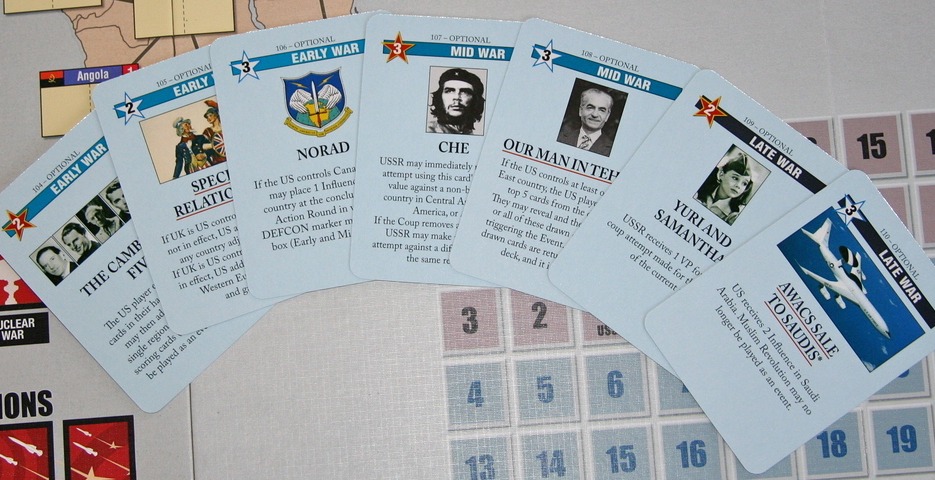
We are pretty inclined towards shiny and new, and with several fairly voracious collectors among us, there’s a steady supply. We do a BGG geek list every month with our own ‘most played’ and ‘most epic’ game of the month. Splendor has been very hot for the last six months or so. But some games have never been far from the tables, like Game of Thrones, Eclipse, Mage Knight, Ankh-Morpork, Chaos in the Old World, Dungeon Lords, Lancaster, or Mare Nostrum. We’re in the middle of a Twilight Struggle league right now, actually. I guess if there’s a game we have a certain affection for it’d be Twilight Imperium, the old grand dame that doesn’t get played that often, but has generated some great stories over the years. And of course there’s Heroscape, the greatest toybox in modern gaming, which comes out every Christmas for an epic child-friendly and later adult all-night session. Likewise Arkham Horror gets a spin around Halloween and/or Gaelcon. Also, different people are into different particular games, and would play them away in a closed session, like block wargames, or even a little RPG action. We’ve made a few stabs at campaign play in things like Pathfinder the card game and Imperial Assault. But I guess all that comes under ‘shiny’, right?

We’re on a couple of web sites and groups. Our main site is currently hosted by Big Tent, which is a US based group hosting service. We attend the cons with our little signs letting people know what we’re about. We get traffic via BGG and word of mouth: friends of members, families, etc. We have a process for acceptance, which is only fair given the fact we’re in family homes, not public venues, so we like to invite people along to an initial game and see how we all get on. This is that personality fit thing I mentioned. It’s very rare that someone is actually turned away, but again, you know pretty quickly when you meet us if you’re going to enjoy gaming with us, so it’s a mutual thing.
Consistency is the key. You need to meet regularly, and so have at least a core group of people that you are certain will be around. Jimmy, Niall, and I have been doing this for about eight years now, and in all that time at least one of us has hosted something almost every week. I think it’s important that your members know that kind of stability is there. Now, life is life, and we’ve had to cope with various family logistics over time, and we have members that are very keen to invite people to their homes as well, and that’s absolutely great. But equally we have some members that we see only very occasionally, and they’re welcome every time. We only ask that you stay in touch, and respond to the annual clean-up email if you’re still interested at all. Again, the point is we have that centre to organise that, and you build a group on that, and then build layers of craic around it. Like I said, people should feel welcome and comfortable, and when the ground is solid, it’s a lot easier to feel that way. You have to be a good host, and though you have ground rules (no crisps!!!! ;)), you need to be able to respond to the different members’ preferences and needs, while also having fun yourself. The bottom line is, as I said, we’re all gamers, and we all want to enjoy ourselves. That should never come at anyone’s expense, so being sensitive is part of it. So is having the piss taken out if you, of course. We’ve all been there. I roll ones, by the way, and there’s a zone of chaos around me where probability ceases to obey the laws. Ask me sometime about the game of Relic where everyone at the table was both astonished and in fits of laughter. Look: the bottom line is if you want to build a gaming group, you’re going to want to make it so people will want to keep coming back and more people will come. Be organised but open, welcoming but attentive, and above all PLAY! Like yourself at Knavecon, Vic, you have to get away from the desk and hit the tables, right?
Dr. Harvey O’Brien
Film Studies
http://cup.columbia.edu/book/978-0-231-16331-6/action-movies
Dr. Harvey O’Brien
Film Studies
http://cup.columbia.edu/book/action-movies/9780231163316

Guys,
A lot of you will know Ronan the proprietor of Dungeons and Donuts in Galway. He’s organizing a 24-hour Game-a-thon in the shop in Galway on the 17th October here’s why…
“This is going to be an event to raise money for cancer care west, where a bunch of volunteer gamers will attempt to keep games running in the store for 24 hours from 12pm of the 17th to 12pm on the 18th. Everybody knows someone who has been affected with cancer and this summer gone I was directly affected, as my amazing wife was told she had cancer. That is why we raised money at the last pre-release (almost €1200) and that’s why we are running this 24 hour GAME-A-THON!! Cancer care west are an amazing organisation and any help we can give them will mean a lot to them and all the cancer patients they help.”
Ronan
I think this is something as gamers we can all get behind. Knavecon and Brocon are sending on prizes for the event and it’s now being shouted from the roof tops. So spread the word, get involved
Vic
https://www.facebook.com/Dungeons-and-Donuts-Galway-200414633365785/timeline/
E-mail: Dungeonsanddonutsgalway@gmail.com
TEL: 091 567930
I spoke above Village a few months back. An unexpectedly good worker placement game. For some reason the artwork on the box led me to believe it was an also ran formulaic twee game. I was happily incorrect
Village is a vicious worker placement generation game with no cuddly toy and no didn’t he do well. In village you have to carve out a legacy that outclasses everyone else. It’s not twee it’s not coop and it’s not team building
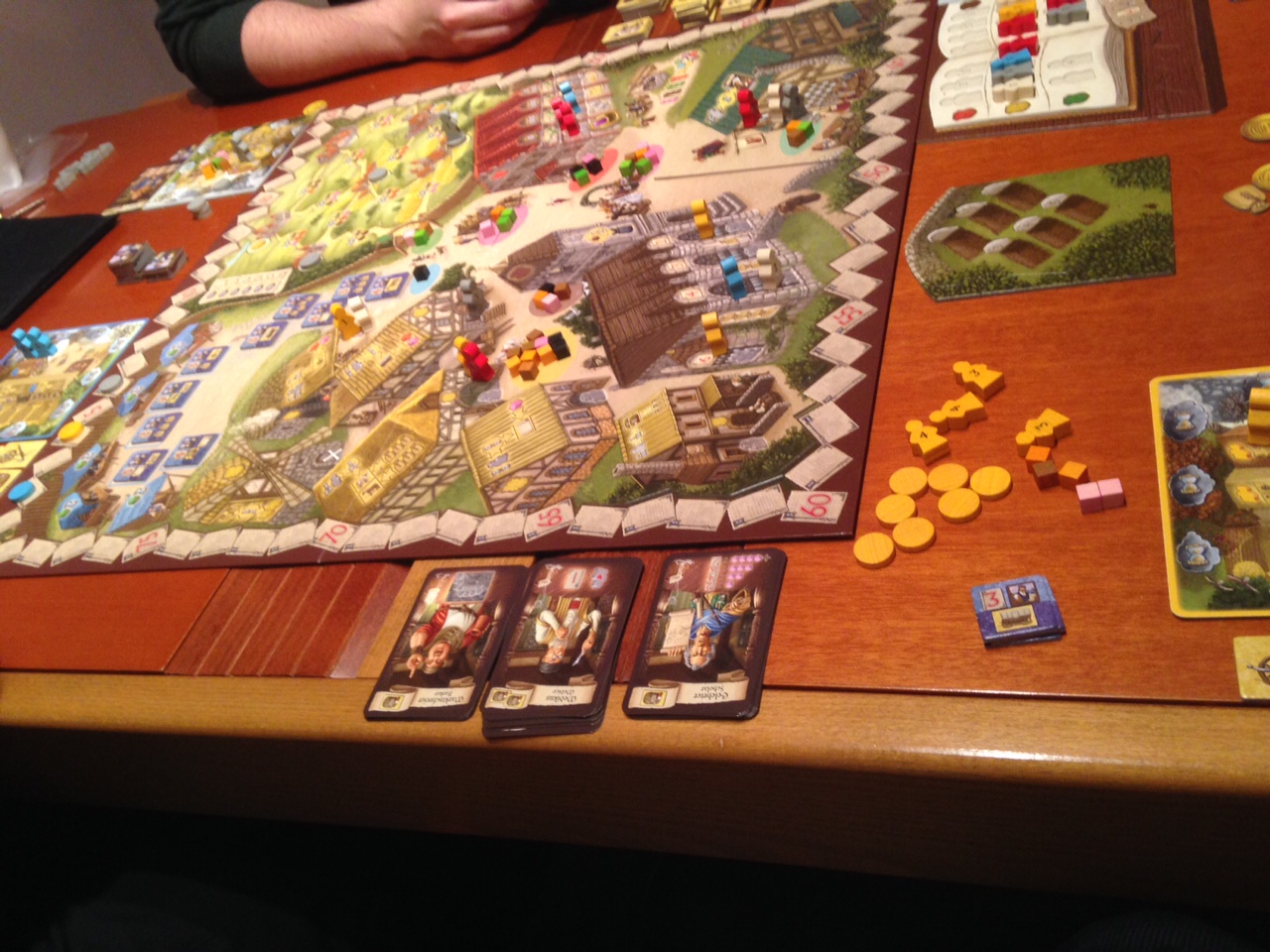
The inn expansion adds some extra options to the game. Five players, two new locations, one of which has a lot of sub options open to it and beer. Lots and lots of beer
One of the new locations is the brewery. It’s simple. Use it and you get a new resource, namely beer. The inn on the other hand is a den of scum and villainy (we’ll sort of). Sitting in the pub are a number of upstanding citizens that can grant you a boon or a bonus if you ply them with the aforementioned beer. The priest for example can rig new monk appointments. The bard can remember one of your relatives in song thus giving them an extra exclusive spot in the book of remembrance. There’s a total of thirty of these rascals so there’s a bit of variety in each game. The inn is a fur lined mousetrap. (As admiral Ackbar would say) you need to send in one of your dudes to curry favor with the patrons but only a wedding will get them back out and crucially if you die in a pub no one will remember you. (I can only assume you get stepped over or become furniture when you’ve drunk your last)

Even with all these extra options open to you the game still doesn’t feel overly complex even for beginners. Well second game beginners maybe.
I had a lot of fun with this. I would have won it had it not been for one of my less civic minded chums who got to the priest and rigged the elections. I wasn’t happy… that said I still had a great experience with this game and I’m eager for more. Again if a regular in the group didn’t have this I’d be off to buy it and the expansion in quick succession
Great game. Great expansion
Huzzah!
Vic

Len O’Grady is an artist, colourists, comic book artist and dedicated gamer. Among other things he works at every child’s dream job, “colouring in” and is more than capable of doing it in between the lines. I couldn’t even tell you half the stuff he’s worked on so just take a trip over to his website and have a look for yourself. The guys good. BTW the article on Cypher a week back featured some exclusive art from a number of years back (16) he did for me at a games con.

Anyhoe on top of this Len is a dedicated role player and I caught up with him (online) to ask him to tell the nice people at home what it’s all about and why he obviously loves it. He was good enough to take the time to answer some of my questions and send me on some of his tasty art work.
Role playing, what’s that all about?
Role playing games, as the name suggests, is a story telling game where a group of players take on the personas of characters and have adventures set for them by one special player, a narrator if you will, called the GamesMaster. The most well known game of this type is Dungeons and Dragons, or D&D, but if you’ve ever played a fantasy game like World of Warcraft or Skyrim on a console or PC, you’ve played an RPG with a machine as GamesMaster. The rules of a game like this define the basic parameters of the world the players will inhabit, with dice providing the random element. Players can be a Wizard like Gandalf, a Vampire Hunter like Van Helsing or a Gangster like Tony Soprano, depending on the genre and type of game you all want to play. It all comes down to a group of friends hanging out, eating pizza and throwing some dice about while telling each other a story

How did you get involved in gaming?
Well, I was around twelve, and had just devoured The Hobbit and The Lord of the Rings when I was given my first Fighting Fantasy book- it was basically a Choose-Your-Own-Adventure solo game books where you flip around numbered paragraphs and try and get to the end without meeting a gruesome fate. Fighting Fantasy was a bit different in that they had a very simple game mechanic that allowed to to fight monsters, gain treasures and magic artifacts- you were interacting with the story. You have to remember that this was rural Ireland in 1984- no one I knew had anything beyond a Sinclair, so this was a revelation. I’d seen copies of Dungeons and Dragons in the Toy Shop in the Crescent Shopping Centre, but hadn’t paid them any mind- the concept was just outside my experience and the books were way too expensive. It wasn’t until Corgi Books brought out an RPG called Dragon Warriors that things really took off, once I got my head around the concept that you could make a story for your friends, that was it. I think we met a few months later when a Games Club was launched in Limerick. I set up my own group out of my English Class in the Crescent every Wednesday afternoon, playing in Middle Earth, Arthurian Britain, and a Horror game called Call of Cthulhu. Luckily for us, Ireland mostly missed out entirely on the “D&D is a form of Satanism” furore that swept the US, spearheaded by religious zealots and various prigs. As time has proven, all their various claims have proved to be utterly false, and more often then not based in demagoguery and the desire to make a quick buck from rubes.

What is it you enjoy so much about role playing?
It’s the social aspect- you get to immerse yourself in a world of the shared imaginations of your friends and create memories as vivid as any you actually experienced. There’s an element of the oral tradition, that need to share a really good yarn with others around a campfire. You get to be take on another persona, solve problems, employ strategies and deal with social situations. I’ve seen deeply shy, introverted kids just blossom, learn useful social skills and sharpen their numeracy and literacy. I’ve seen kids avoid going down some dark paths and make bad choices by gaining a love of reading and history while creating adventures for their pals. Now the kids I played with have kids of their own and are rediscovering the hobby again with fresh eyes. It’s a hobby of imagination, so by definition it’s not passive, it’s powered by participation, is fired by quick thinking. At it’s best, it makes better people.
If you could pick one rules system what would it be?
Okay, that’s tough- games go through fashions and fads as much as any cultural phenomenon, but if you were to press me, I’d have to go for the Top Two: Dungeons & Dragons or Pathfinder. Both offer excellent introductions to the games, though I’d have to admit that Pathfinder’s Beginner Box noses ahead by dint of the wealth of material it offers- there’s literally months of games in there. Now, if you were to ask me what my favorite Rules System is, that’ll be Castle Falkenstein- a Victorian Fantasy Game that’s a cross between The Prisoner of Zenda and The Princess Bride. Players create little journals where they keep their characters, and play with decks of playing cards with each suit representing a facet of the character (dice are disreputable, the province of foreigners and scurrilous ne’r do wells). You get to play dashing Hussars, Mad Scientists, Sidhe Ladies and more, all while chewing up the scenery and twirling mustaches- it’s immense fun you’d be amazed by the one-liners people can come up with.
What’s the most memorable event in a game you’ve played?
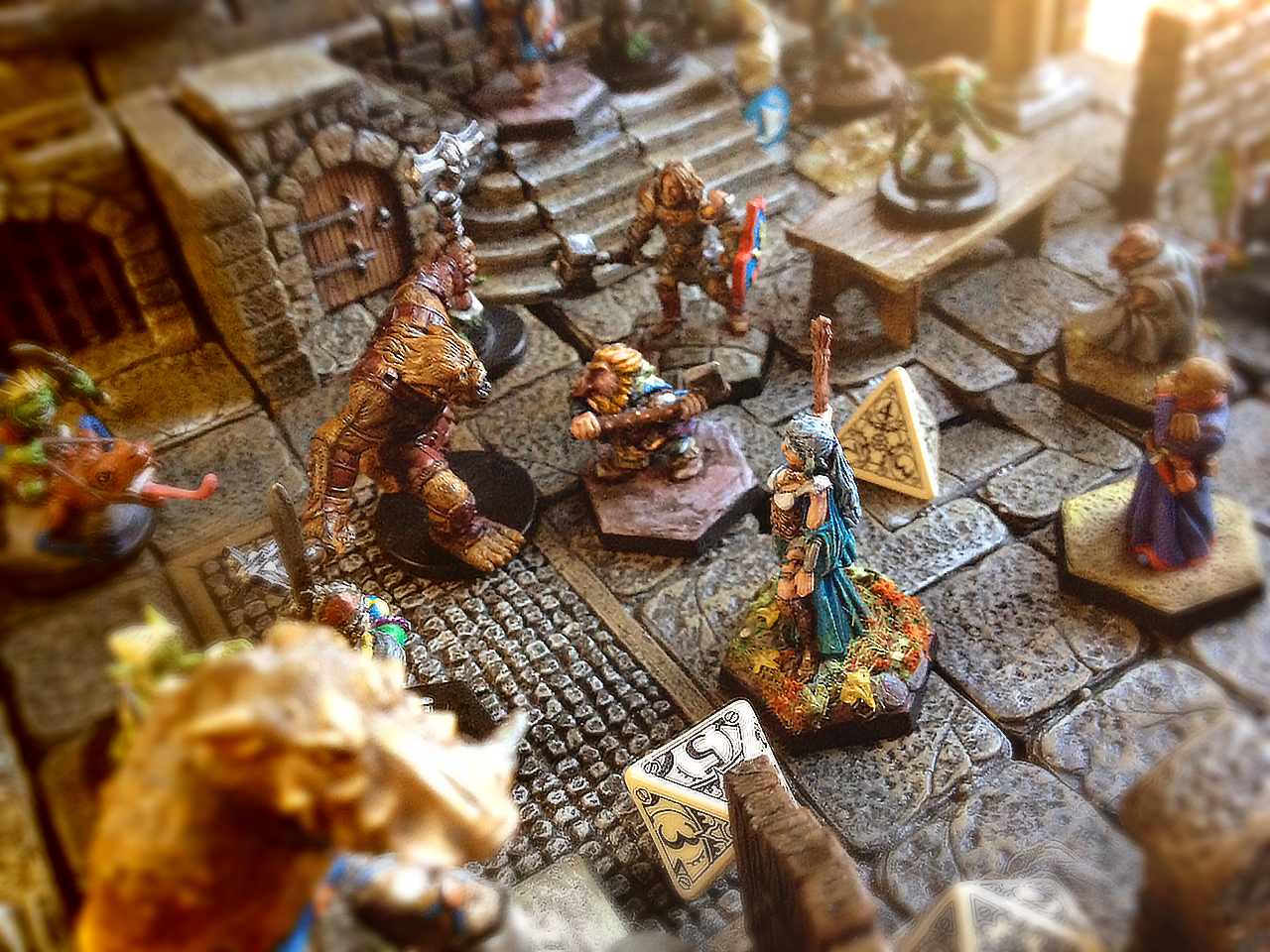
Now you’re fishing- I could talk of Tayto, the Ogre Slaying Mage and his misadventure with a shape changing Mimic, but no one needs to hear about that. To be honest, there was a game I ran with Dave Stafford out of my flat in Rathgar in the late nineties- the party got split into to groups- and God bless him, Dave took over and ran both groups at once, jumping from scene to scene with a fifteen minute timer, ala. The Empire Strikes back. It was insane- during our fifteen minutes off, we discussed how to handle our dilemmas, so had no clue what was happening to our friends half a continent away. Then the timer went beep and it was on like Donkey Kong. Things got seriously epic by the end- we saved a kingdom from being destroyed from within by brain devouring psychic monsters and our friends defeated an vast supernatural army led by giant cannibal hags; and there was excellent chinese food. One of our friends was completely new to the hobby, and his wife later told us that he used to dream about his character having adventures- it just gave a massive adrenaline shot to his imagination, and that’s hugely gratifying.
In the age of high technology do you think roleplaying still has an audience?
Oh, absolutely- the age of austerity has raised all boats when it comes to tabletop games, and RPGs are no exception. A console game runs to about fifty quid- you get maybe a few weeks out of it and then it’s on the shelf or down to the shop for a pretty poor trade in. I have games I’ve run and played since I was a teenager- you just need the rulebook, some dice, pencils and paper, and you’re good to go. Everything else, the playmats, the miniatures, the other supplements, these are entirely optional; what matters is the human interaction- that’s the engine that runs a role playing game. Every option available in a console game has been anticipated by it’s designers, so by definition is limited. Pen and paper RPGs have no such restrictions- being a GamesMaster means being able to roll with the zany left field stuff your players throw at you- that’s where some real exciting stuff happens- utterly unrepeatable but unforgettable. I just have to say to you- Mersen the Bard, seducing the barmaid- and Wham! you’re right back there with me, even though that game we played is about twenty five years ago. That’s something technology is going to be hard pressed to emulate, that sense of a shared experience crystallized in the mind’s eye.

What would you recommend to people who want to start Roleplaying?
Baby steps- if you’ve played console games like Skyrim or even Zelda you’re already half way there. The cartoon Adventure Time had D&D in it’s DNA, and Dan Harmon, has had a few great D&D episodes in his show Community.
The best thing is just how easy it is to start playing now- Wizards of the Coast, the publisher of D&D, offers the basic rules for FREE. It’s bare bones and without all the flavor text and copyrighted material, but it’s all there for players. On top of that, Wizards is in the process of rereleasing their back catalogue digitally and at a very reasonable price, so if you’re returning to the hobby, you can pick up your iPad and get cracking. If D&D isn’t your thing, DriveThru RPG offers other genres and game systems, many for free and covering all ages, from very small kids to old veterans.
So pick up a copy of the Dungeons and Dragons Starter Set and remember what the hobby’s creator, Gary Gygax said;
“The secret we should never let the GameMasters know is that they don’t need any rules”. Just play it through and expect to get better next time. Take a look at this comic based around a weekly session of D&D- it gives a pretty good flavor of a typical game
A phenomenon that’s popped up over the past decade is that of games being recorded for Podcasts or for sites like Twitch. The better ones are:
Titansgrave
Critical Role
HarmonTown
Nerd Poker
The Adventure Zone
and the granddaddy of them all that Wizards of the Coast put on: Acquisitions Inc.
Apart from Titansgrave, these have varying degrees of adult language and themes, so check them out before passing them your kids
Don’t worry about getting everything right or being self conscious- concentrate on having fun and making sure your friends have fun too- it’s a game with no “winners”, the winners get to survive for the next adventure and watch their characters become more heroic and powerful- maybe become legends themselves. it’s really just cops and robbers with an actual plot and a mechanic to say when you’re dead- don’t sweat it and have fun.
Thanks Len.
Brilliant!

Courtier is like a very complicated dance all explained in words on paper. The rules are simple but the execution is a different story.
The Tempest games are a clever idea. A story arc played out as a number of board games. The first of which, well the prequel really is Love Letter. You’ve probably played love letter at this stage, if you haven’t it’s worth gambling a tenner and picking it up. A number of the characters in the game appear in courtier with the same artistic style. It’s noteworthy, like the finding cadburys fingers in a mini market whilst on holidays.

Courtier is like Steve Jackson’s Revolution. In fact I think it’s by the same designer. The game is all about placing influence cubes on various courtiers, (members of the court) each of which are themselves members of a grouping like the church, the merchants, the royal court and so on. Having the most influence in a group grants you some special abilities like placing two cubes rather than one, gaining one bonus point per turn and so on. Some of these are more valuable earlier and later in the game.
Each player starts with a secret petition and a communal pool of four visible ones each of which involves having control of a number of specific courtiers.
Completing these Petitions scores points. This part feels a bit like ticket to ride or Lords of Waterdeep.
The game IS pretty simple rules wise however keeping everything in your head, abilities, other players abilities, your moves, what others are angling for, what could happen, completing petitions before someone else… It’s hard work requiring a sharp brain and a number of replays. It’s certainly way beyond the normal gaming decisions of should I have crisps or biscuits

I like this game. It’s neat. It’s tidy. It’s not exceptional but it’s a solid game and if you’ve never played revolution it’s definitely worth a look. The game has charm and the whole story arc idea is something I like. I do think revolution has the edge but I believe they both need a good replay to be sure. Which I’ll do
Huzzah!
Vic
I don’t know a whole lot about wine. I tend to like the red sort which in my experience comes in “nice” and “not as nice” variety (at least for the first glass, after which it doesn’t really matter and now it’s time to sing), I don’t get hints of cherry, earthy flavors or robust bouquets. I do know a bit about boardgames and I can detect game flavors and traits very quickly. Dogs of War (or Dags if you prefer) has got hints of several games but still manages to be unique and cheeky.
There’s a touch of Imperial in there (no bad thing), Modern Art (I like modern art), War of the Roses and a few other notable games, none of which overpower the flavour or make it a clone. Dogs of War stands on it’s own two armoured feet and is a great fun game

The box is quite imposing and you’d be forgiven for thinking it another map based conquest game, it’s not, there’s no map. At it’s simplest it’s a tug of war game betting game.
One of the things I like about this game is you get it straight away, or at least in the first game. There’s no hidden gotchyas, you don’t need to play a half dozen games before you’ll have a hope of winning, you just need to play and watch out for everyone else. Tricking them into helping you win helps too.
Each player starts with a screen behind which they hide their money, troop cards, event cards, house cards, victory points, lint and boiled sweets.
There are four rounds each a little longer than the last in which you
1. Buy troops
2. Play your 3-5 captains
3. Fall for your opponents ploy
4. Fail to gain points that looked so easy to get at the start
There’s optional crying but mandatory swearing, threatening and parentage questioning.

After buying troops with your meager funds. you then have to decide on which side of three battles you want to place your men. This is done one at a time by each player around the board. The battles themselves are fought for the six houses in the game each of which you hold ‘shares’ in. Sticking your captain on a particular side has the effect of moving a pointer either one direction or the other (like a tug of war) depending on how good (and expensive) the troop card is you’re going to commit.
The scoring for a battle is tug of war style like twilight struggle. So every plus for one side is a minus for the other. Figuring out what everyone is up to before you commit is key. Alliances are flimsy and opportunistic, last minute placement of troops can swing battles, falling into a ruse by other players would have Admiral Ackbar horse by round two.
There are no set paths to victory (winning a lot of battles doesn’t hurt) and you will need to adjust your plans on the fly. What I really like about this game is you’re never left wondering what to do, it’s all very simple really. For what is in the loosest manner a worker placement game (very loose) there’s a massive about of interaction with other players, not just cock blockery, direct in your face, HA! sort of play.
There’s a number of neat little mechanics in there that make the game unpredicatbale but rarely luck based. Every mistake is yours to own, just like every victory.
The models in the game are lovely, each sporting a steam punky style. The artwork is good but not exceptional. (We’re spoiled by Fantasy Flights pristine designs). The build quality is excellent, everything is solid. it’s a fine construction.
Having played this once, I wanted to rush out and buy it. Since it was late at night and I live miles from anywhere that would have been a mistake. If someone didn’t have this game in our group I would rush out now and buy it. It’s the most fun game I’ve played since Knavecon 6. Well worth a look
Huzzah!
Vic

In a continuation of our series on why we love gaming, I’m looking at gaming with your children.
Borys Zabinski is a gamer, blogger and manager of the kids corner at Knavecon and Knavekids. He’s a regular gamer at our Thur night gaming sessions and can be relied upon to pull out some weird and often wonderful Polish boardgame we’ve never seen before with a name only he can pronounce. He has a great knack for engaging younger gamers and I caught up with Borys and asked him a few questions on gaming from a family point of view
Just to give a little background: as a kid I was living in communist Poland in little town – there were no boardgames in early 80’s apart from Ludo (which was and still is called ‘Chinese’) and one really big hit: it was Monopoly clone called Eurobusiness. If you ask any Polish person in age bracket 35-45 to name his/her first boardgame, probably 90% will tell you it was Eurobusiness ;). In late 80’s few more boardgames were available with some Polish companies freely copying Western games like Talisman (called ‘Magic and Sword’) – nobody cared about copyrights those days. Some of those games were really big sellers with total prints of over 40 thousands per print! With limited access to computer games anything that had ‘game’ in title and looked like it was designed in (rotten) West was big hit and we played those games all the time. I am sure I have played Eurobusiness over 100 times…
My parents have absolutely no interest in gaming at all 😉 Except for Eurobusiness (which I think they have played over 50 times). This in mind I have to say that I have found my father’s Snake and Ladders published before WW2 😉 (must still be somewhere in the attic in Poland). They would consider games as childish even these days.
I like to say educational but everything in life for kids is educational. Main benefit is entertainment and fun. I am all about having fun while playing games, other things like maths skills, reading skills, ability to think ahead etc. are there anyway and we all know about those ;). I am always trying to pass few interesting facts about game’s theme we play (be it videogames history if we play Boss Monster, geography and history facts if we play Tigris & Euphrates or who is Mi-go if we have a quick session of Eldritch Horror 😉 ).

Different kids like different games. I have three kids, each one different character. My two boys age 9 and 6 really like negative interaction and love to do bad things in games to their parents, problem is when they are a target. Daniel (9) really hates coop games, he likes to play and make decisions himself. Robert (6) is OK with coop and see no problem working together to win (and share a win!). Maja (4) hates any type of negative interaction in games or even any type of violence in games. Every family need to try few games and see what they like.
As early as possible. Give them games to play with components. Let them punch tokens when you have new game. Show them cards. Play simplified rules, even play full rules for round or two (I have tried Through the Ages with Daniel when he was 6). Do all of this and you will have 24/7 gaming partner in 10 to 15 years! (well, unless you introduce them to Minecraft…)

ou just need to find a game that will fit everyone (even adults). Game like this would be famous Turtles game. Of course sometimes this is not possible and I try to simplify rules to fit youngest but still keep it interesting for rest of the group. Other option is just play with youngest and let him/her move pieces or roll dice – for 3 or 4 year old that would still be great fun (at least for those 5-10 minutes 😉 )
I love videogames (as any other gaming in general) but recently moved into boardgames ‘full time’. I love the real multiplayer aspect where you see all of the opponents, love those ‘in your face’ moments or back stabbing 😉 I like playing with kids as well but this is different as you need more patience, sometimes you need to let them win, sometimes it can be real pain in the ass (yes!) but in the end it’s very enjoyable experience (especially when you can see their progress).
First of all I would recommend to attend Knavecon or Knavekids where you can check different games to see which one suits your kids gaming style. Cooperative games are also safe choice as you do not play against each other and allows younger kids to participate in play and share win – Forbidden Island and Forbidden Desert are very good and easy to learn games with great theme. I like a little bit more of randomness while playing with kids as this will give them more chances to win – dice games like Zombie Dice are great example here and have proven to be perfect gateway games at previous Knavecons. If your kids love storytelling and have great imagination than Dixit or Story Cubes (there are many different versions) will be perfect – some of Dixit sessions with kids are amongst best we have ever played. Do you think your kids are more into maths, analysing, bluffing? Try some of Reiner Knizia designs, these might be out of theme and a little bit dry but I think some of his smaller games are amongst best kiddies games – Turtles (aka Ribbit), Bucket Brigade, Bee Alert and many more. Again, Knavecon and Knavekids are best places to go to check what your kids like or dislike, start easy with small and quick games and build you library introducing more complex games over a time.

Limerick Gaming Blog
 KNAVECON