It Is a Small World

Picture five people sitting around a table holding different sized squeezy bottles of poster paint in various colors. in the center of the table is a two foot square piece of carpet. In turn they squirt paint from an edge inwards. They get points for how much paint they managed to get on the carpet and annoy other participants by painting over their colours. When they run out they get fresh bottles and the process repeats for a bit. That’s It in a nutshell. 


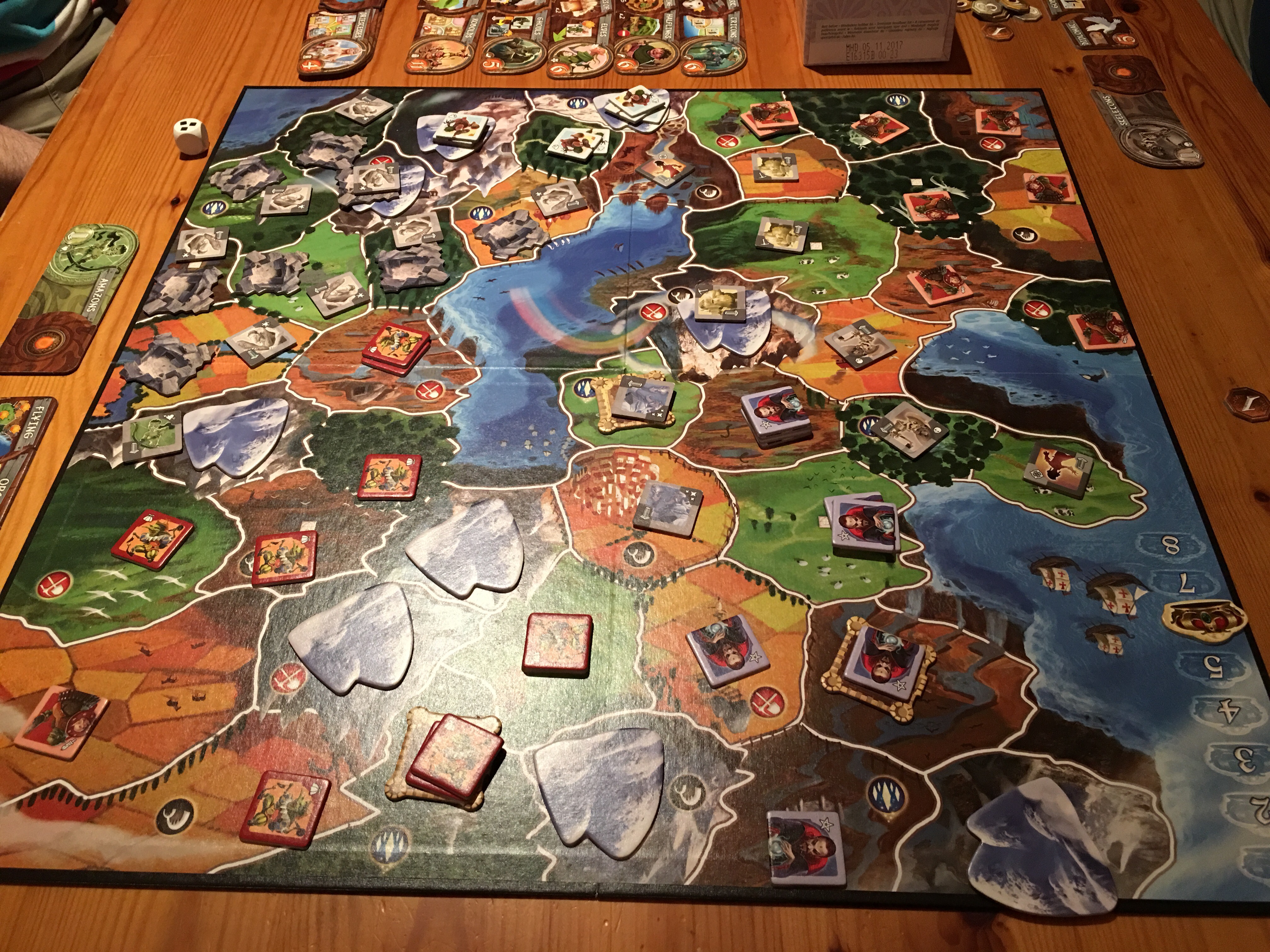
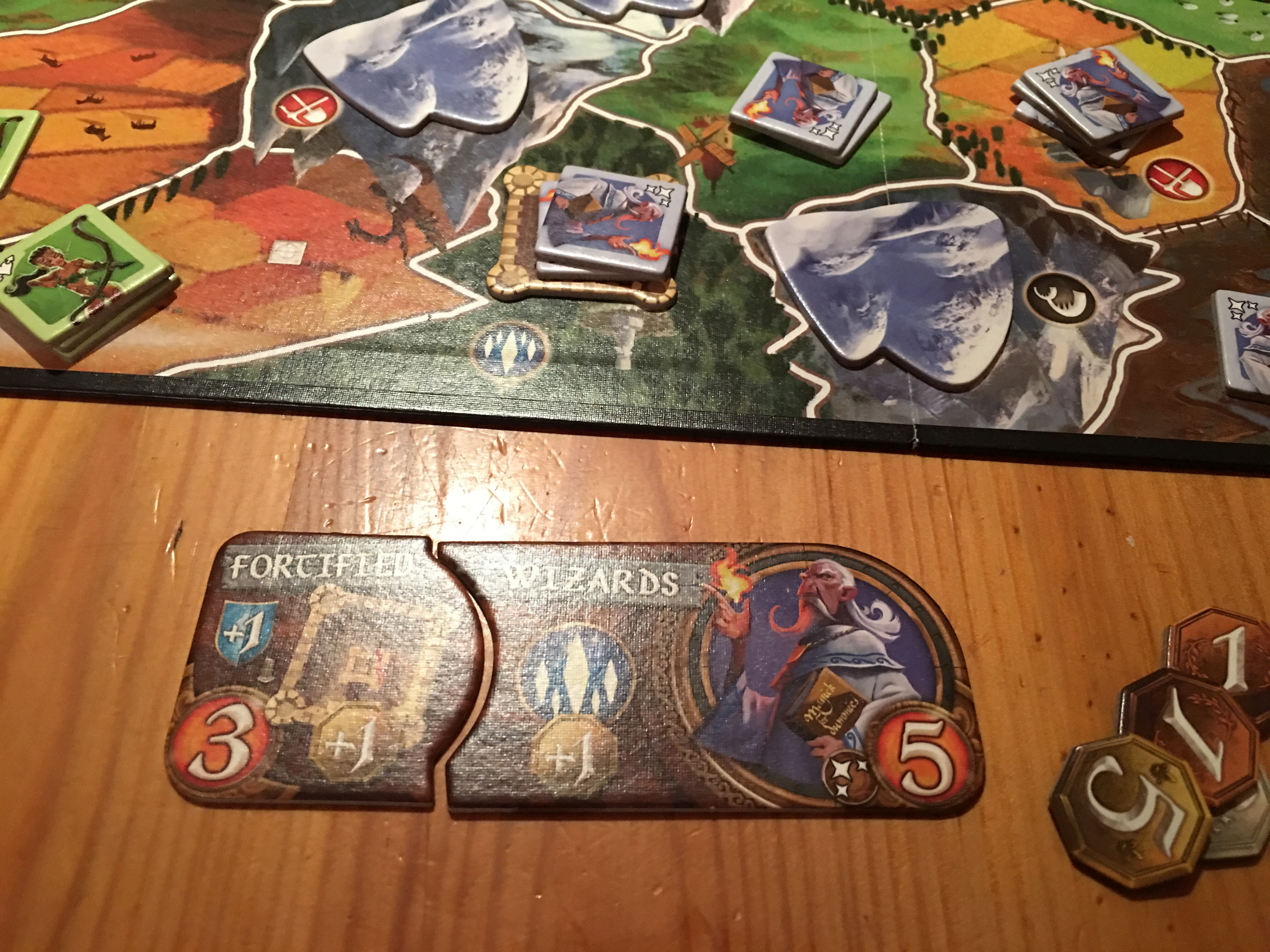
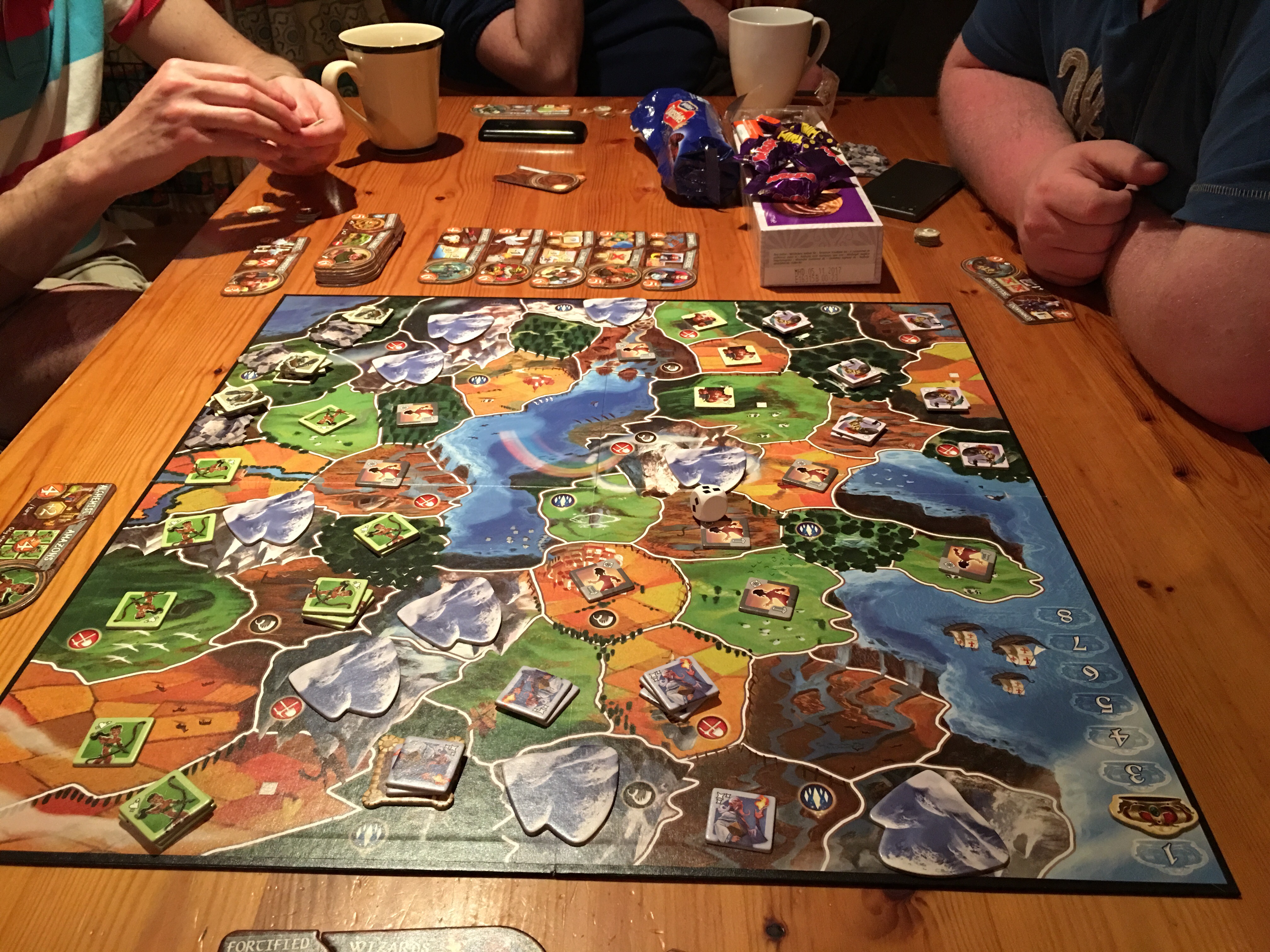
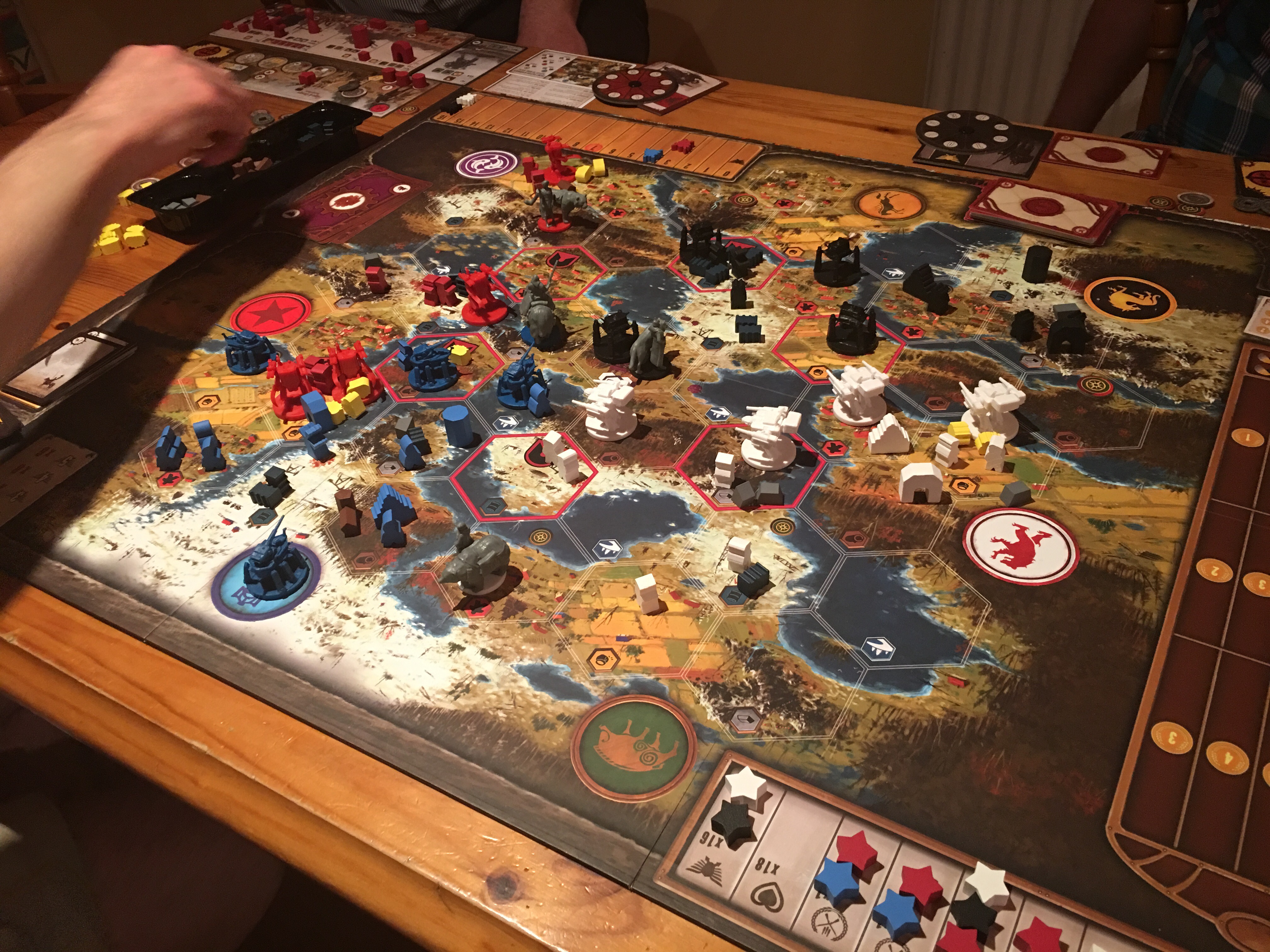
Small World is played out on a map of twenty plus regions of mountains, swamps, plains etc. you start with a stack of creatures chosen from a limited draw each with a special ability. So it could be Commando/Wizards, Berserker/skeletons, Merchant/Giants. The mix of races and attributes keeps it fresh from a replay point. You spread your guys around the map trying to take regions in such a way as to score the max points. Some attributes like mining makes you score more points for taking mountain regions and so on. Some of the attributes give you things like defensive camps and castles to drop. Truth be told there’s a stack of combos and a number of expansions with an awful lot more. Some of them seem a little over powered. I’m looking at you Trolls but in cases like this it just means you have to put your own interests aside and cooperate to thwart leading players. So basically they’re overpowered
After you’ve done as much with your finite amount of dudes you can spend a turn going into decline like any good civilization. You pick another race next turn and go forth and conquer. The old race you had stays in place usually minus it’s bonuses and you no longer control it but they do score points for you. Declined races are usually low hanging fruit for fresh conquests (unless they’re trolls, bloody trolls). 


Repeat for eight turns and count your points. 
Small world is an old game now. It’s a rehash of a game called Vinci and it’s starting to age. Old doesn’t mean bad necessarily but for me,my gaming tastes have moved on and I want more bang for my gaming time. This will play well with kids. It’s up there with classics like ticket to ride and catan but I’ve already played those to death and I’m guessing you have too. 


I’ll have it Knavecon. It’s a good game, well presented and verging on very good but not quite getting there. Opinions vary and it’s definitely worth a look, but make up your own mind about owning it
Huzzah!
Vic 

Welcome 

Boss Monster has been around for a while. I’ve owed a copy of it since a few Knavecons back. I even played it once so it seems a disgrace that I’m only around getting to reviewing it now. A disgrace. 
I got to play it again recently. Owning it as I do and having a couple of willing testers at home. 


Boss monster is like a lite version of Dungeon Keeper. You probably know the premise. You control a big ol’ monster who wants to be the boss above and beyond up to three other players with a paltry five hit points and a penchant for souls.  
Just like zombies, heroes are both the primary food source and apex predators for monsters. Lured by four types of treasure they arrive in the local town and try their luck in your pointy dungeon. Did I mention the dungeon?


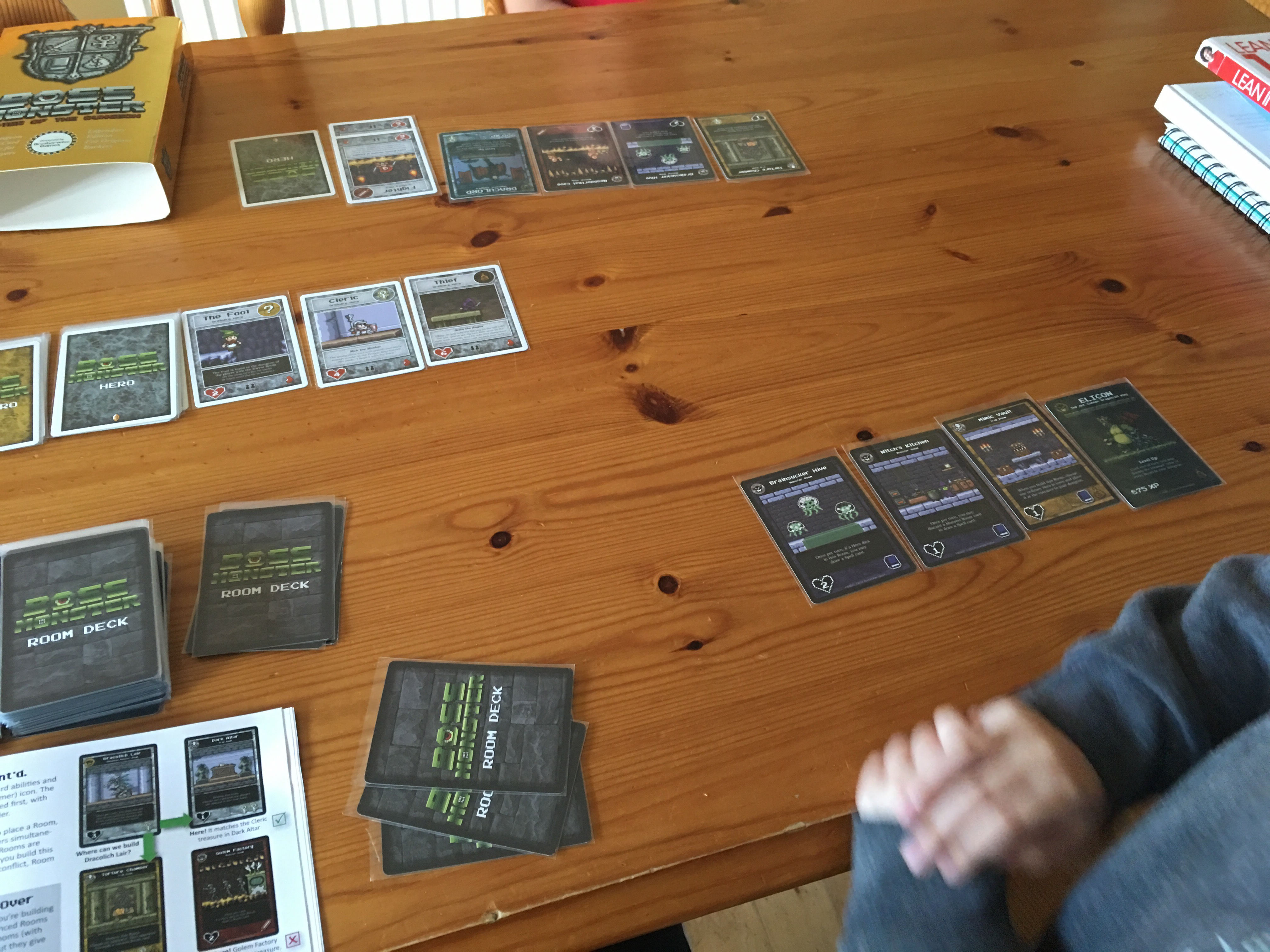
Boss monster is a card game. You start with a hand of room cards, one of which you can place each turn and a few spells, which either help you or hinder another boss monster. Each room contains a type of treasure and heroes March in like moths (marching moths) towards the traits that most suits them. So clerics will be attracted to the dungeon with the most ankhs, fighters love swords and so on. Part of the skill is in having more of a treasure type than your opponents so the most heroes come to you. 
Now having attracted these wild bears into your cabin you need to insure your dungeon rooms can deal sufficient damage to kill them before they get to your boss monster at the end of the corridor. Each of the rooms deplete a certain amount of hit points from the heroes. If they run out they die and become points for that player. If they don’t die along the way they twang the big nose of the boss monster and emerge more than likely with “yeahs!” and high fives to never return. Get five hits and for you the war is over. 
Things ramp up a little when rooms can be upgraded to improved more hurty ones but to balance it once all the regular heroes have run the gauntlets a set of epic heroes with more hit points appear. These guys and gals are tougher, deal two points of damage to boss monsters but are worth two souls if you knock them on the head. Towards the end of the game it becomes very touch and go with the last few epic heroes zooming in like the last 

 missiles in missile command. Top marks if you survive. A win if you get ten souls. 


This is a fun little filler. 30-40 minutes of play. The artwork is cool 8bit graphics reminiscent of an old side scroller but with some great humor in there (I particularly like the vampire bordello). 

It’s not a serious game by any means and the luck of the draw will affect you though there is some skill in here. One of the most enjoyable aspects is impeding the works of someone else’s dungeon with a freeze spell when a particularly tasty hero is striding through. As always a game where you can laugh at someone elses misfortune is a joy. Doubly so if you caused it. 
Fun game. Cheap. Portable. Kid friendly 
Huzzah!
Vic 

Their five year play time

StarTrek Ascendancy has been on my radar for quite a few months. It looked like it had it all until a number of reviewers talked about a LOT of downtime between player turns. Suddenly it was as popular as a dog with worms at Crufts. 
After a considerable amount of humming and equal amounts of hawing we welcomed it to our humble table last Thur. Our humble table overfloweth with Trek. We’re going to need a bigger table. 


I’ll get straight to it. This is a good game, a long game but a flawed game. 
First and foremost downtime is not an issue. Not with three players. It whizzed along nicely but it’s a long game. My team went for a “quick” win after two and a half hours of play but failed and the game could have rattled on for another two and half hours I’m sure If we had them. We Did have a lot of fun playing it in that time. The theme is strong and some of the mechanics are excellent. 


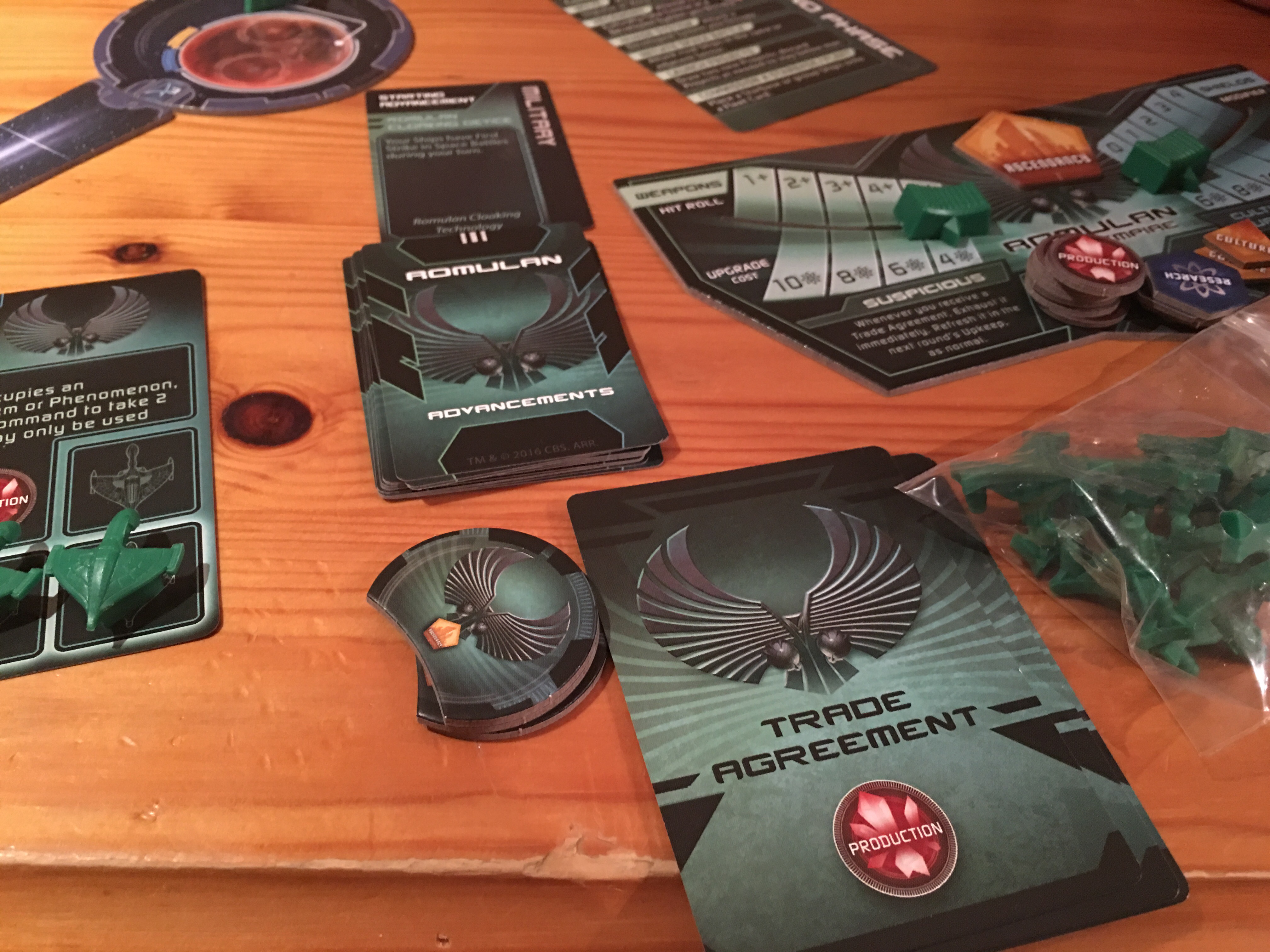
Three players no more no less take the roles of the Federation (sciencey, explorey), Klingons (warlikey, empire buildey), Romulans (fighty, sneaky). (Guess which one I played?). You start with a home world that produces culture (used for peaceful expansion), construction (building ships and bases), science (researching tech, upgrading weapons and shields). Each of the races are a little different and start with a basic Tech. There’s an interesting balance between the three and trade agreements give you a little boost in production. Alliances are fragile but with only three players forgiveness is key. 
The exploration part is neat. Planets have a limited amount of space lanes that they can radiant out from themselves. These join onto revealed planets that they themselves have a limited amount of radiating space lanes and so forth. Players start 18 inches away (their homeworlds anyway) from each other and eventually join up with the space map looking very like a database schema after a bit. Planets are a mixed bunch allowing some or all resources to be gathered if you conquer/colonize then. They can also contain either a virgin world (good) or a ship worrying anomaly (usually bad). This bit was a bit random and you could wind up with a stack of dud planets near you with opponents drawing Aces all the way (Ive seen a rule variant on this I’ll use next time) 
A game is won by either cultural advances (ascendancy) or military (conquer the other two players home planets). It’s a long haul. 


Now for why it’s flawed. There’s something amiss here. The random planets I can get over, the slight imbalance of some of the races ditto. The number of players is just too little for a game like this and adding more players is going to slow it down too much. There are so many good conquest games out their. For the amount of build up and investment of time it doesn’t give back. The mechanics for movement and combat seem dated. It works but it doesn’t wow 
This game needs to be better to wear Trek Cloths. You only have to look at what Fantasy Flight did with Star Wars Rebellion. If they had the Trek license they’d blow this game out of the water. 
Having said that there is charm here. The game is crying out for a rules update but for the price this should already be in there. I’m going to play it again. I’m going to play a few variants and see how it works for me especially come the expansions. 


For now version 1.0 is a good game just not an extraordinary game
Huzzah!
Vic 

Ramming Speed!

I’m a big fan of Imperial 2030. Still my favorite 6 player conquest game by a mile. Antike 2 which I got to play recently is by the same designer, it’s a little simpler to learn and play but it still packs one hell of a gaming punch. 
Antike 2 is a revised edition of the earlier Antike 1. A number of map and rules tweaks make it a tighter more balanced game. I haven’t played the first one but that’s the word on the street. 


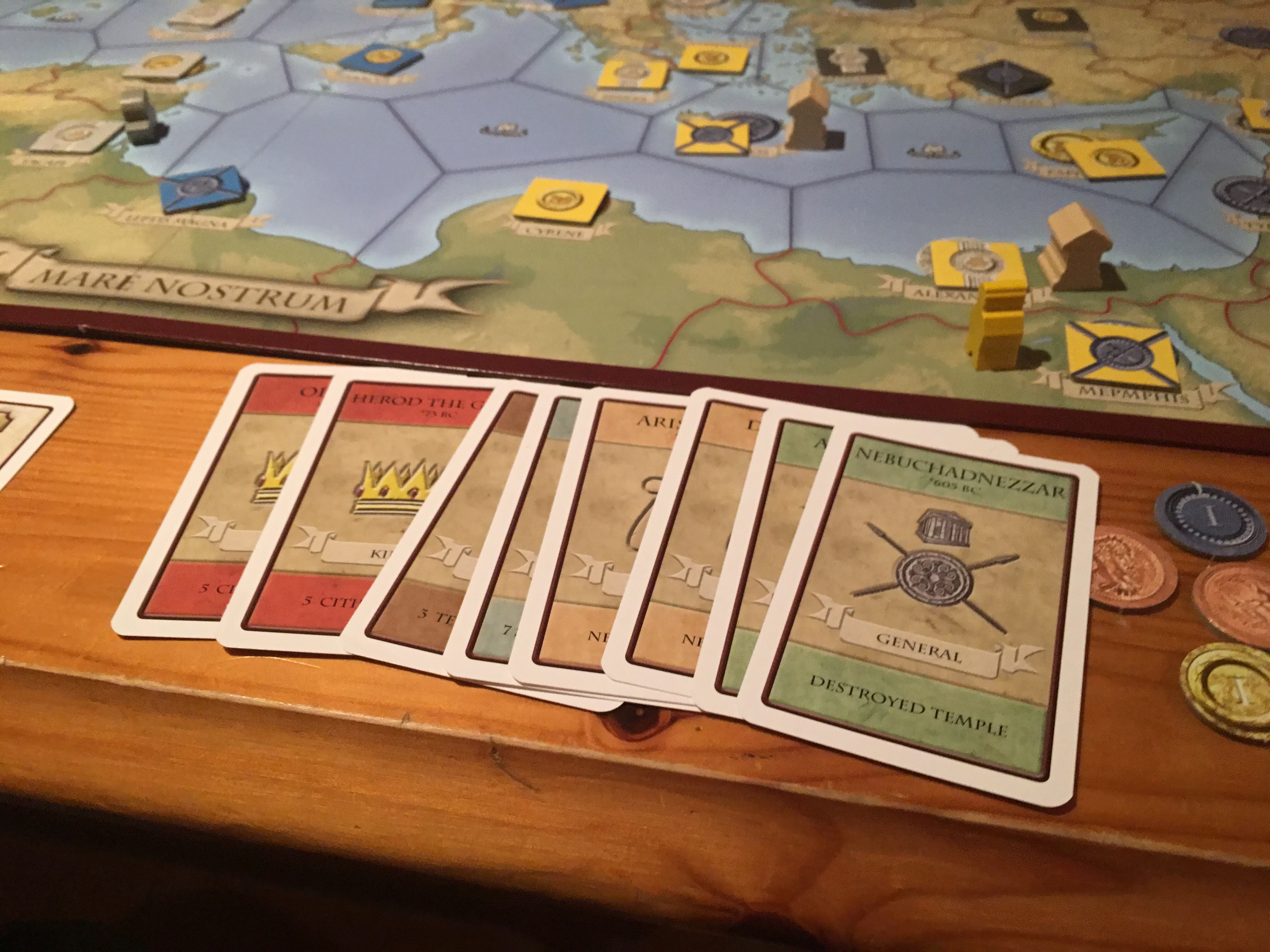
The game is a conquest game but the goal is not world dominance but getting a set of famous figures to join your faction through wowing them with your amazing feats. 
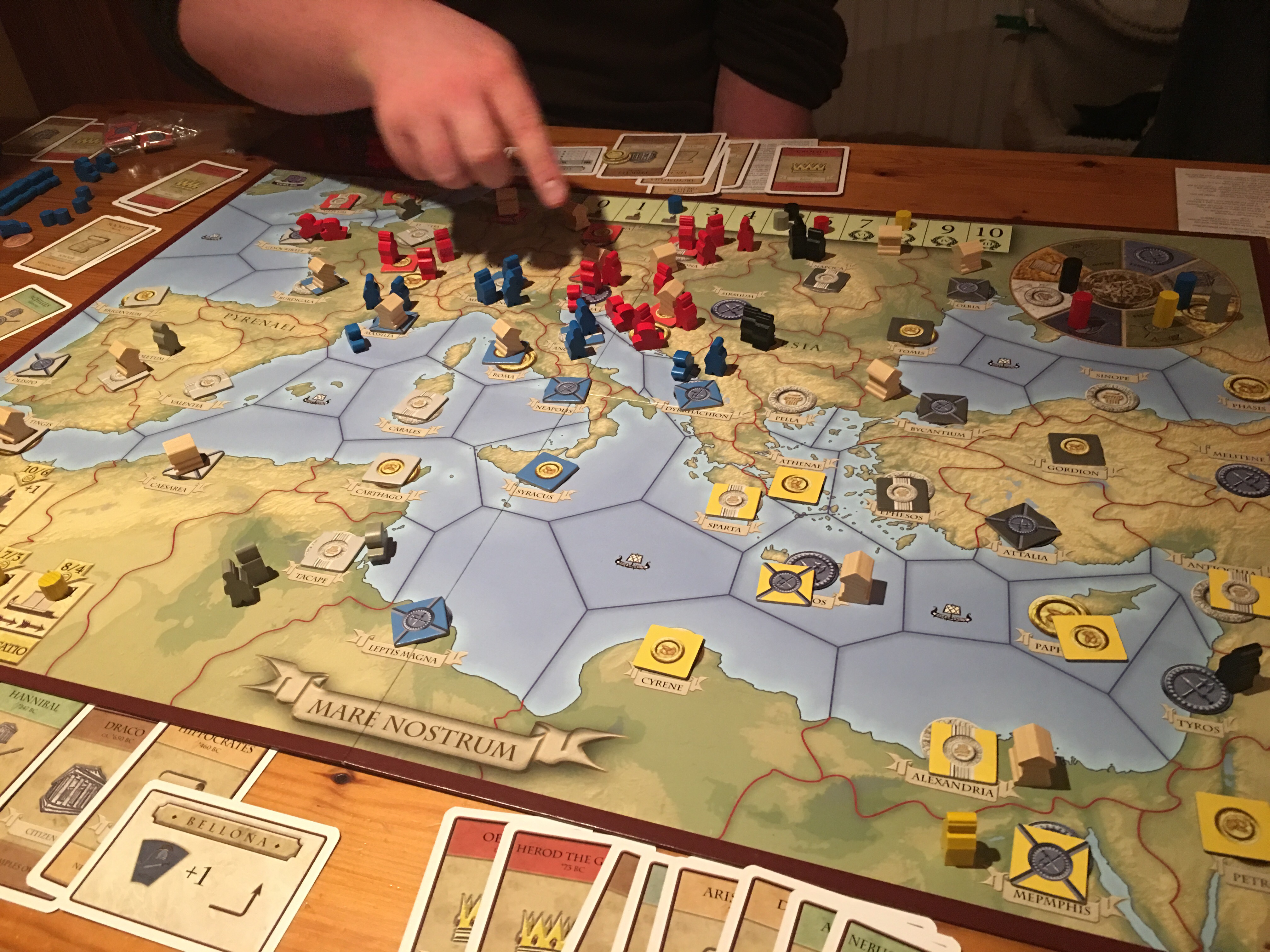
The map (the board is double sided with a different map on the back) shows the Mediterranean split into a hundred or so sea and land locations with a variety of Latin names. Locations can be land, sea or a mix some with Marble, iron or gold symbols on them. You start with a gold, marble and iron producing city in situ (one of each) with a different setup depending on how many players are taking part(3-6). 
The game plays out surprisingly quickly for a conquest game. Each player’s turn is snappy. You take one action and it’s brief. Then the next player take theirs. Truth be told some actions like harvesting can be done while the next player takes theirs. Turns are very straightforward. You can harvest one type of resource from the matching cities you own, build armies (with iron), build a temple (marble), research tech (gold) or move armies. 


Temples are key. They triple the conquest, defense and deployment limit for a city. They’re also pricey.  
Combat is simple. If two units meet and want to fight they wipe each other out. No if buts or maybes. Galleys kill galleys, troops kill troops. Bring more units than your opponent and you win a battle. That’s is. It’s not all about the battles like most conquest game. 
In Antike you’re trying to impress those personages I mentioned earlier. You achieve this this by destroying enemy temples (everyone else’s), building multiples of temples, multiples of cities, being first to research a tech or claiming enough sea spaces with your fleets. 
The heart of the game is the roundel at the top of the board. You move your counter clock wise around it’s ten actions and carry out the action you’ve selected. The sizzle here is that you can only skip forward three spaces a tuen so if you want to repeat another action (movement is on there twice) you have to wait or pay in resources to skip forward again. This is the same system as imperial (and a few more of the designer’s games) and means players don’t spam the same move again and again. A canny player could look at where players are on the track and figure out their next possible move and strike while they’re away from counter actions like building. It’s a neat neat system and I’m a big fan
Games are swift. There’s practically no downtime as you need to keep a beady eye on everyone’s moves. The missions make for a more intense conflict. You can’t afford to hang back and let someone else steal the personages. It’s intense but by no means a knife fight in a phonebox. You still need to build up forces and conquer but it’s to a specific short term purpose.  


I still prefer Imperial 203 but that said I’ve played a hell of a lot of it and this is a welcome and equally excellent change. look for a game at Knavecon
Huzzah!
Vic 

More War

War HUH what is it good for? Thur night games evidently. Three Thursdays in a row to be accurate. 
I spoke about Triumph and Tragedy last week and said I would be revisiting it. I didn’t know I would be so quickly and then again the week after. The gaming gods are fickle. 


It’s still my favorite game played this year. I’m going to talk about some of the bits I didn’t touch on last week. It’s all complimentary so feel free to skip it. 
For such a relatively simple game there is so much gaming goodness effortlessly squeezed in here and a lot of it subtle. This has always been my experience with GMT games. 
Many many (many) years ago I played CIV 2 multiplayer on the PC in work on a super idle Good Friday. It went on for a long time. The one thing I found about the game which was a surprise was how important posturing was. Actually getting stuck in and attacking was the road to ruin but you could achieve so much more and more importantly cheaply with the threat of violence. The first half of this game is all about positioning yourself and threatening as opposed to attacking. Ok that’s not 100% true. It could be about attacking but it’s also all about having the cajones to do it. 


The old adage of making the other guy die for his country rather than dying for yours is important to your victory in T+T. Picking your fights are key. Don’t get involved in a pointless battle. Don’t over commit. The game has a lovely balance governor whereby If you do knock seven bells out of an opponent there’s always the third player waiting patiently for you both to spend yourselves before sweeping in and seizing victory.  
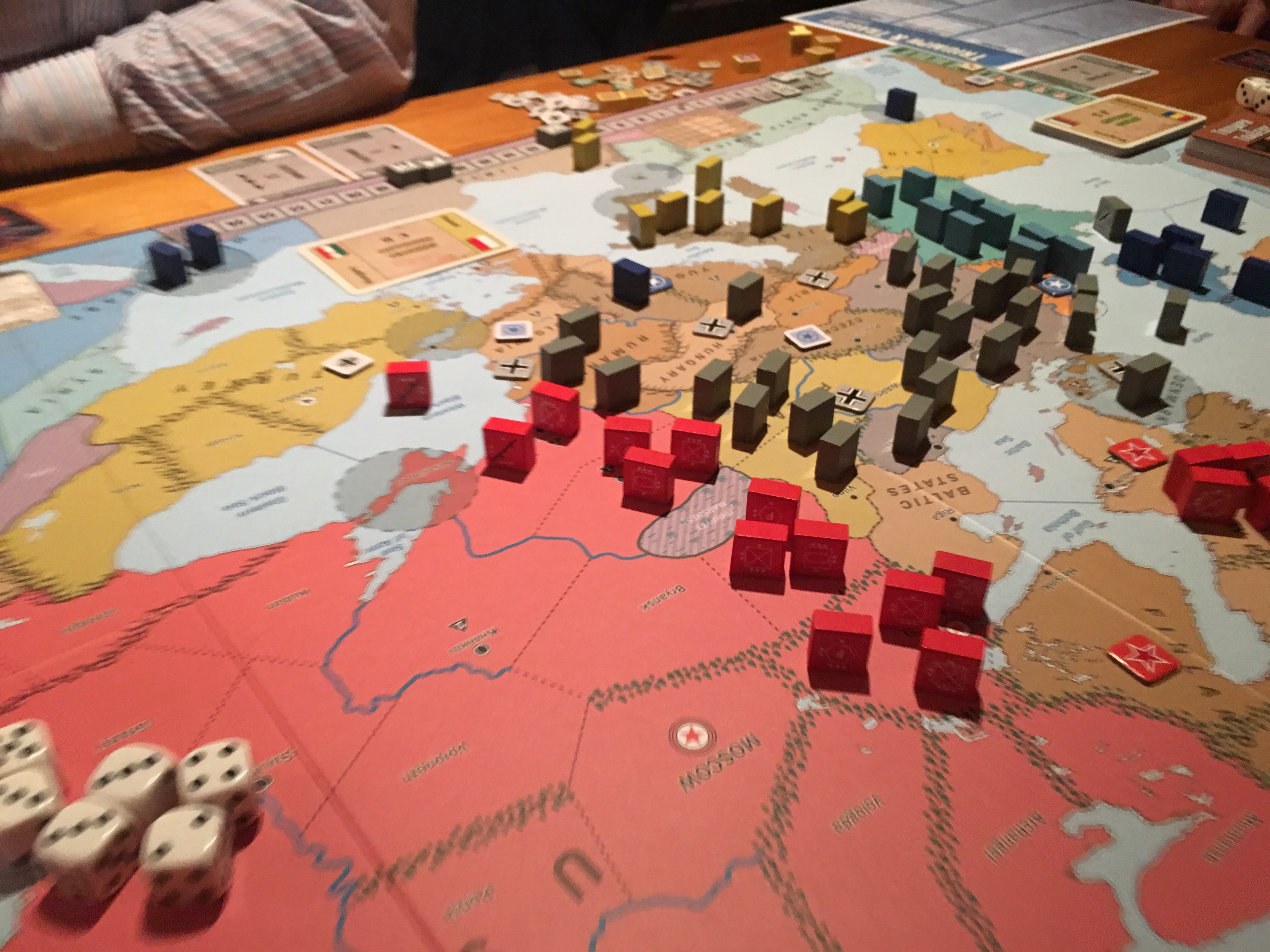
In one game we played I took Russia and mid game I built up a big low tech horde and swept into Poland driving the axis forces before me but the one thing I quickly realized was I was setting the allies up for a handy win so I stopped (or at least I would have if we had played more of the game). It’s a long game it needs more than a Thur night games session to finish or it needs to be started with the later 1940 scenario. 


Another thing I like about this game is the three factions play very differently. The Russians start with expensive factories, relatively small forces but less threats facing off against them. The Axis forces start with a brace of armies both German and Italian, a pile of resource cards and Eastern Europe looking awfully vulnerable. The allies start with a good sized but weedy force in France and England staring down the throat of the Axis. The allies are playing a waiting game, the Americans are coming to help but not for a while. 
It’s surprising how close this plays to the real life events of WW2. Certain counties are easier to sway to your side others are more trouble than they’re worth based on location or how defensible they are. I struggled for the whole game to get Turkey over to my side diplomatically because a military take over would have been too costly. Didn’t happen. 
The economy is an interesting mechanic. In peace time it’s about how far along the factory track you are and also how far along the population track you are. The lowest of these two is how many resources (gold) you generate each turn. To increase factories you spend development cards you had to buy with your resources. Population is based on owning provinces rich in population. As Russia this is difficult. You may own a large chunk of the map but it’s sparsely populated. On top of that factories are expensive to build for Russia compared to other nations. Some targets like Poland and Hungary are too tasty to pass up. 
The game speeds up time. Be careful if you’re quite old with this one. For the three hours or so we played it time slipped by at a rapid pace. There is no down time. Every action is important to either execute or watch. It’s a pleasure from start to finish and it’s always interesting. 


The shorter version is a god send (one of the old gods). You start in 1938 with everything poised to kick off. You start in the same spots but with a huge hand of cards and a big stack of resources to spend. The first turn is a big one with you distributing your largesse. Then is all kicks off. Less time is available to influence. It’s more straight in bare minimum of kissing. I really liked this version. I found the full version excellent but you can get the shorter version done in three hours which is not bad for a GMT game especially one of this scale. 
Ok I’m going to finish this now. It’s sounding all gushy. This is a superb game. It’s only limitation is it’s three player. If you have two players available to you and you like a good solid map based conquest game try this. Try it at Knavecon in September. Chances are I’ll be playing it too
Huzzah
Vic 

Santorini

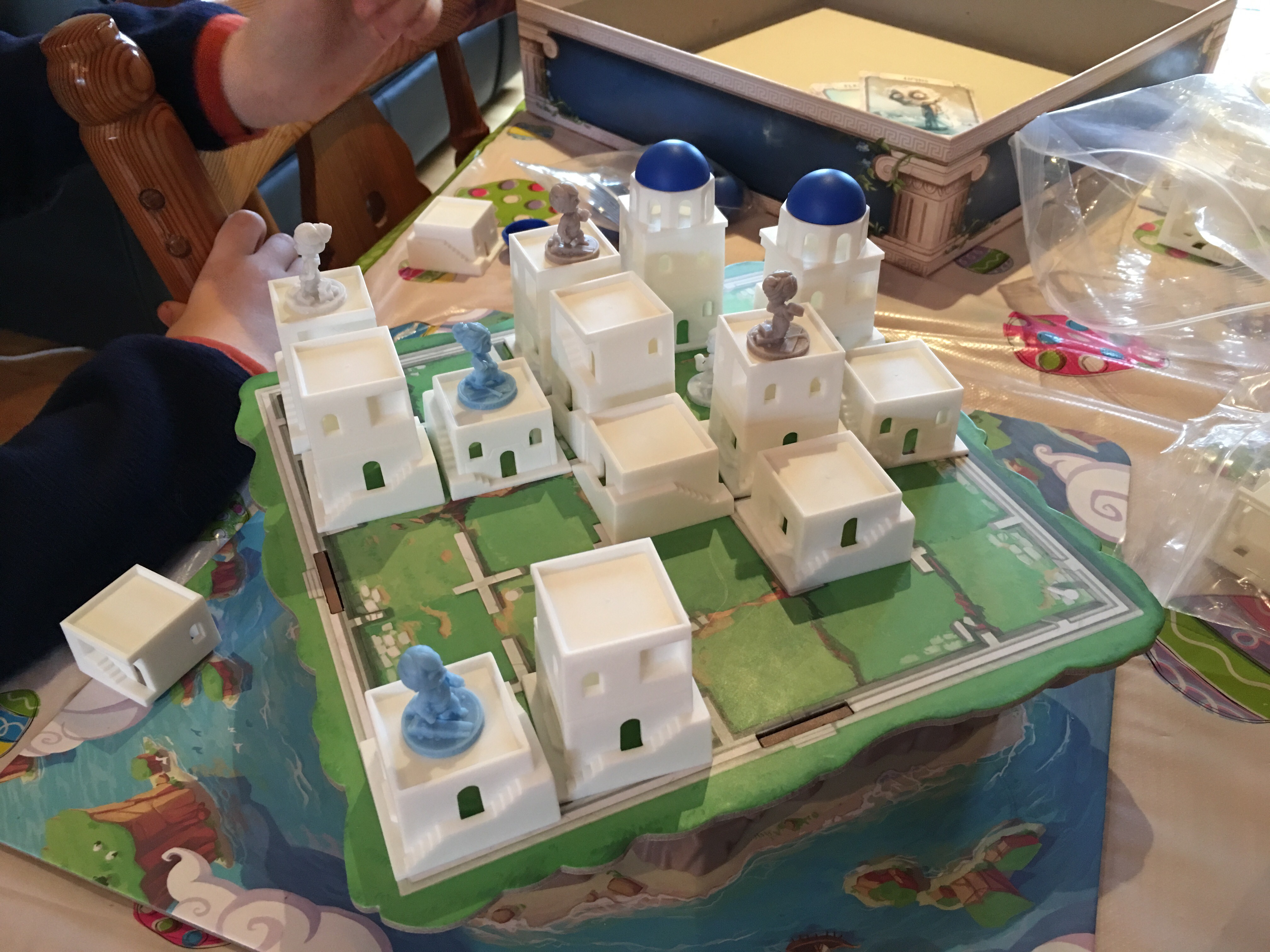
Santorini is a little different. It’s a beautifully presented game with an abstract theme set in sunny Greece. I didn’t read the fluff so I’ll make stuff up. You are trying to get up on the highest building to contact the gods ET phone home style. So are your opponents. First one high up wins. 
The game is played out on a really nice raised five by five grid. Players stick their two workers on the grid (no two can occupy the same square) and take it in turns to move one dude then build next to either dude. The rules are simple you MUST move a piece each turn and you must built on a square. If you can’t for any reason you’re eliminated. 


Building lets you either build on a blank square or build an existing building a level higher (no one owns a building they’re all communal). 
You can move and build diagonally. When you move you can move up onto a building but only if you go up only one level (so buildings become like steps to get you up higher) To win you need to get up on a level three building which at first seems piddly easy but in practice proves not so. Other players as well as trying to complete their own ascension can throw a spanner in yours. Although buildings only go up three levels you can build a forth level in the shape of a domed cap which players can’t stand on thus putting the kibosh on their bold plans. 


All in all it’s pretty simple stuff. It’s purely reactionary and thinking a couple of turns in advance. This is not chess. It is a lot of fun though at least for a while. You wouldn’t play this all night. Games last ten to fifteen minutes. 
Extra complexity is layered on with choosing a god. All of which have special abilities. Hermes allows you to build two rather than one story in one turn. Others (whom I’d know the name of If I looked) grant you different win conditions, the ability to knock players out of the way and so on. There’s around nine basic gods then 20 or so advanced gods so there’s quite a bit of variety. 


Ah ok I’m lying there isn’t that much variety. The game is pretty simple. You move you build. It’s fun. It’s filler. Kids will like it. It’s really only three player. It’s beautifully presented. The cartoony happy graphics are perfect for the game. The pieces are bang on. The game looks lovely. It’s a bit pricey for the game play you get but it’s a nice game to own. I wouldn’t rush out and buy it (I have a copy) but it’s definitely worth a look. I’ll have it at Knavecon 
Huzzah!
Vic 
Fight them on the tables

I like GMT games. They’re meaty. They’re complex. They are super thematic. They’re clever. They’re not for everyone, they’re usually not for beginners. Unlike some games the extra cost in complexity they demand is more than repaid in playability. They may look like a bunch of cubes on a map but then again a good book looks awfully like a bunch of words on a page. 
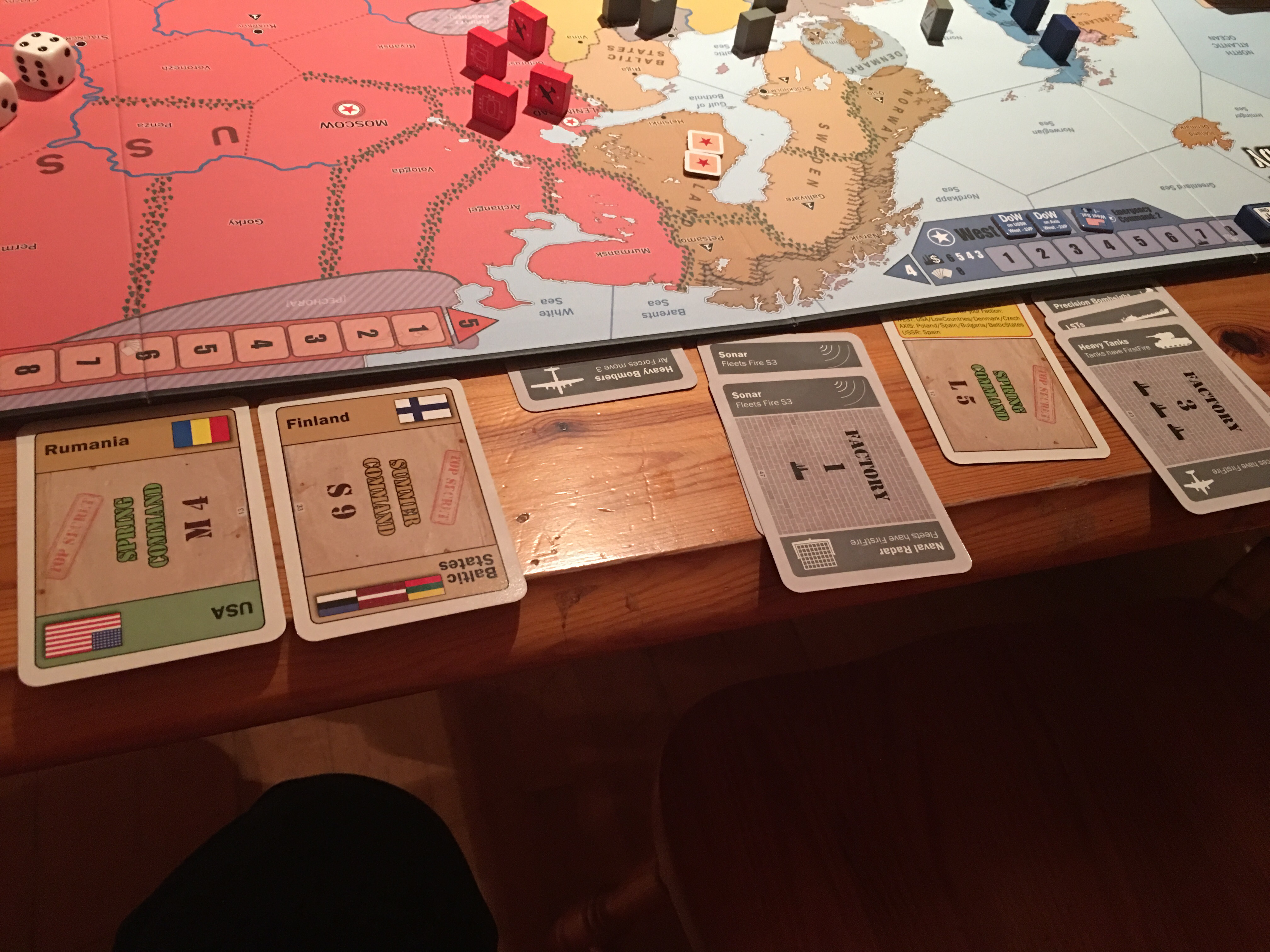
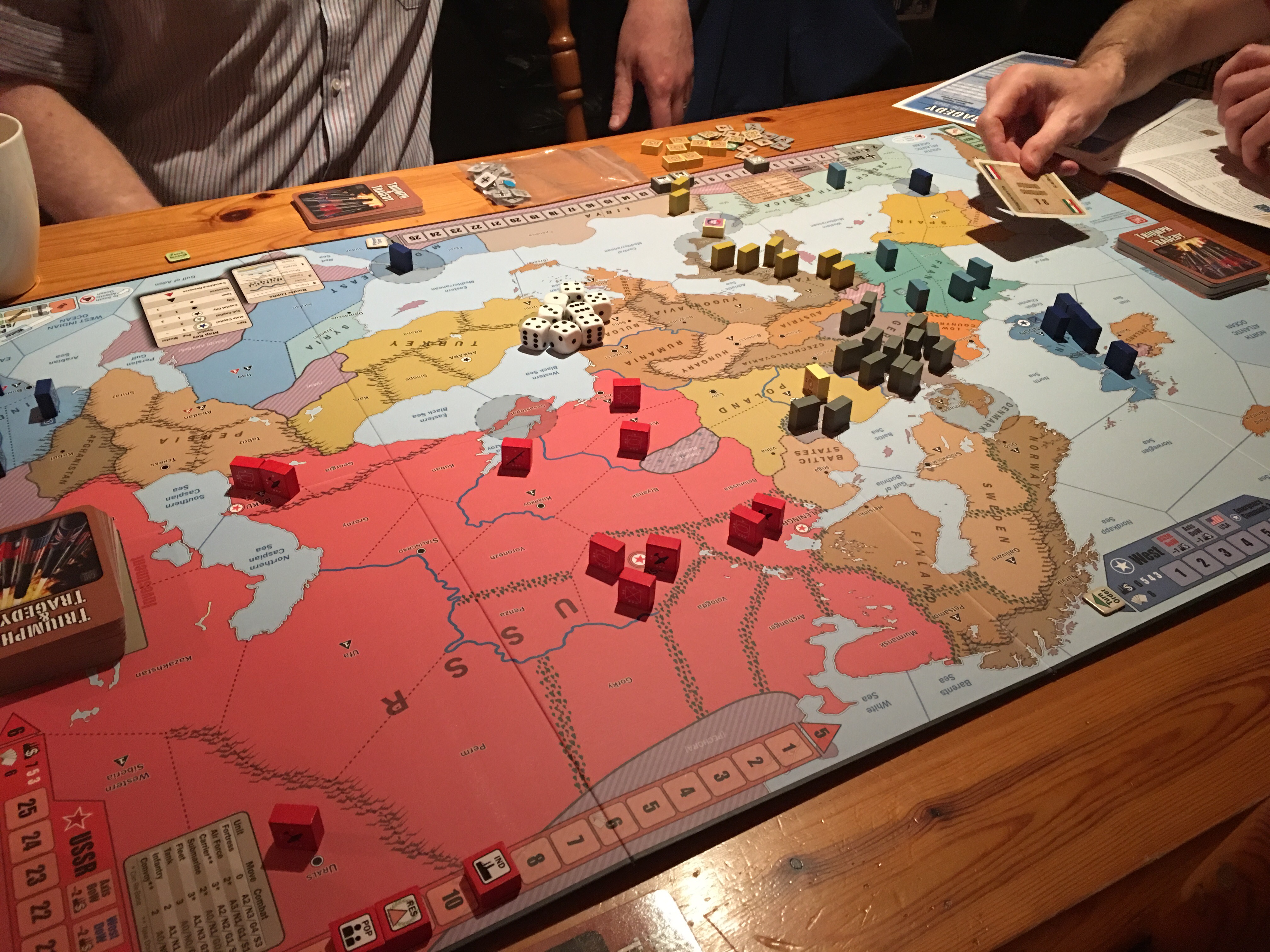
Triumph and Tragedy has been hanging around for a few months trying to break into our gaming night. It’s a three player game and by chance the three people most interested in playing it found themselves together with it to hand on an idle gaming night. Oh boy is this a good game. 


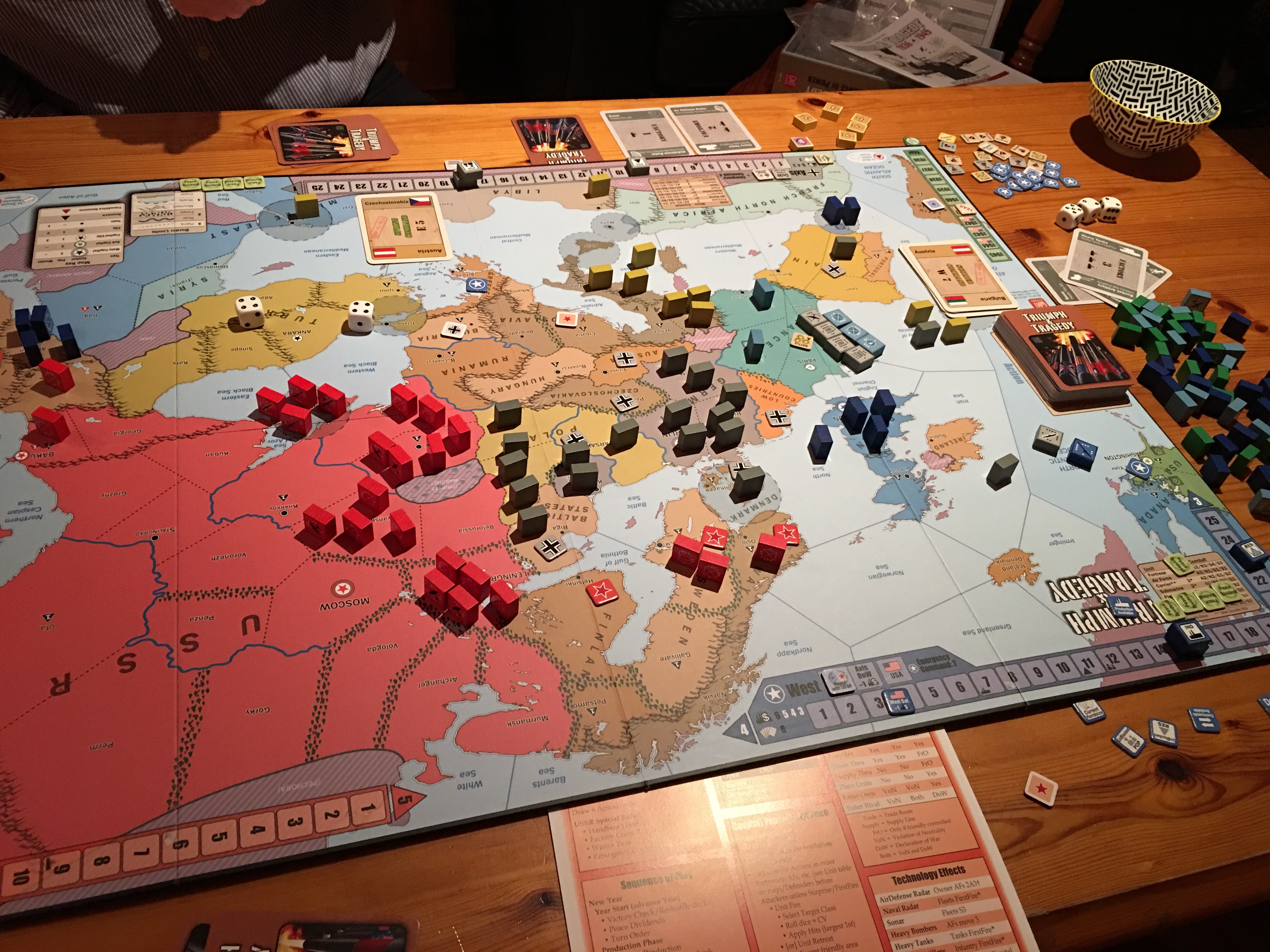
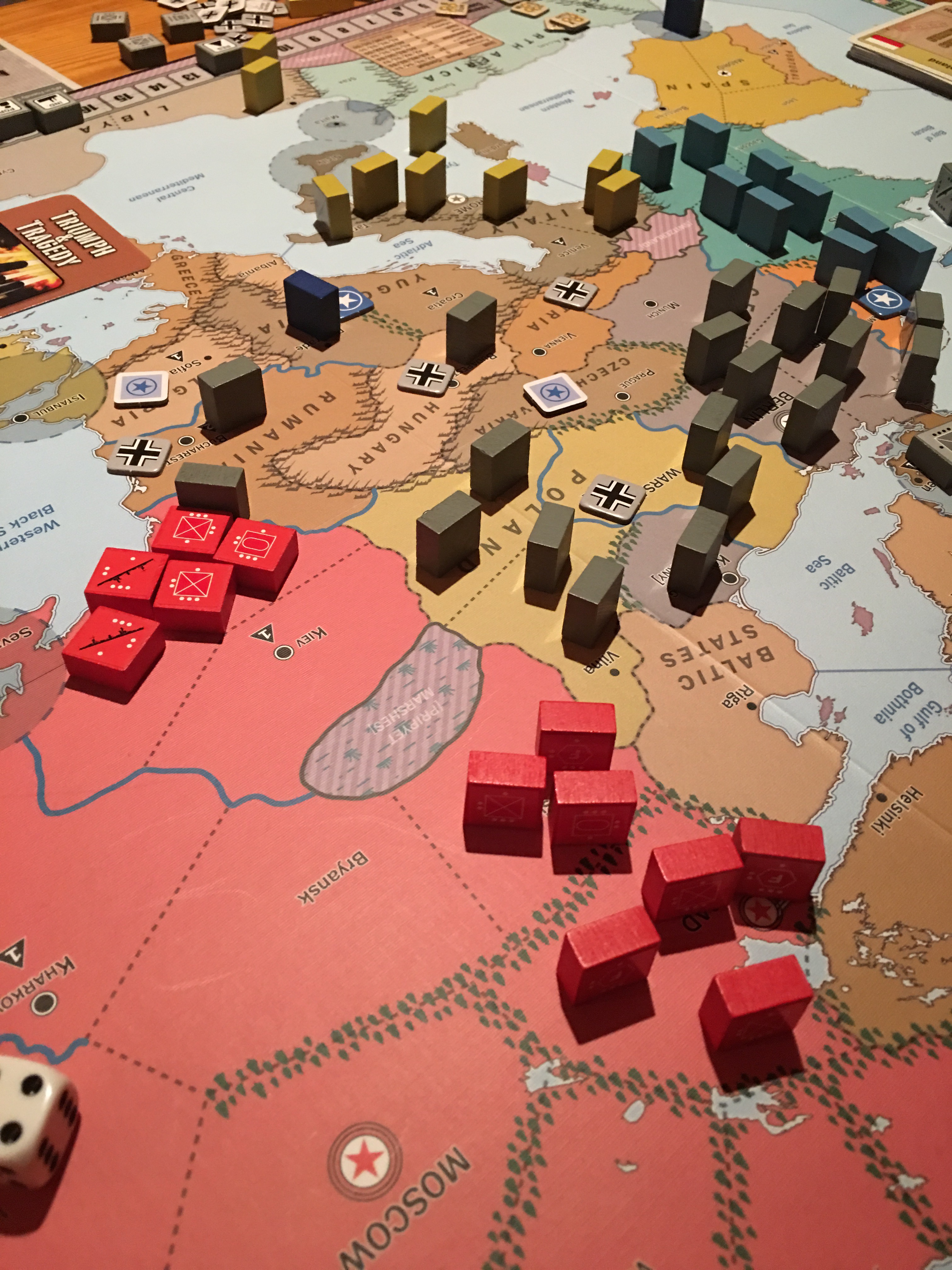
Triumph and Tragedy is a three player strategic war game where players take the roles of the premiers of Russian, Axis and Allied forces in the years 1936-1945. The three groups start on the map of Europe and parts of Asia, Africa and India with a stack of forces and by exerting influence, discovering technology, economy building and good old fashioned conquest vie to be the greatest power by 1945 or earlier if possible. So it’s WW2 for three players. 
It’s the economy stupid. Each player starts with a certain amount of factories, population and resources. The lowest of the first two is how much production you get at the start of your turn. When war kicks off it’s the lowest of all three so keeping a balance is key. Production can be used to buy and strengthen armies, buy action and economy cards. 


Each year represents a turn which starts with a buy phase (cards and armies), a political phase where you burn cards to influence countries to come over to your side and an action phase where armies are moved. 
Buying is easy you improve armies or raise new ones at home or buy economy or action cards. 


The political phase sees you burning action and economy cards. The catch is you don’t get free each turn all cards you pay for and the cards are multi function. Use them all up improving relations or building your economy and you don’t have them later on for moving troops. 
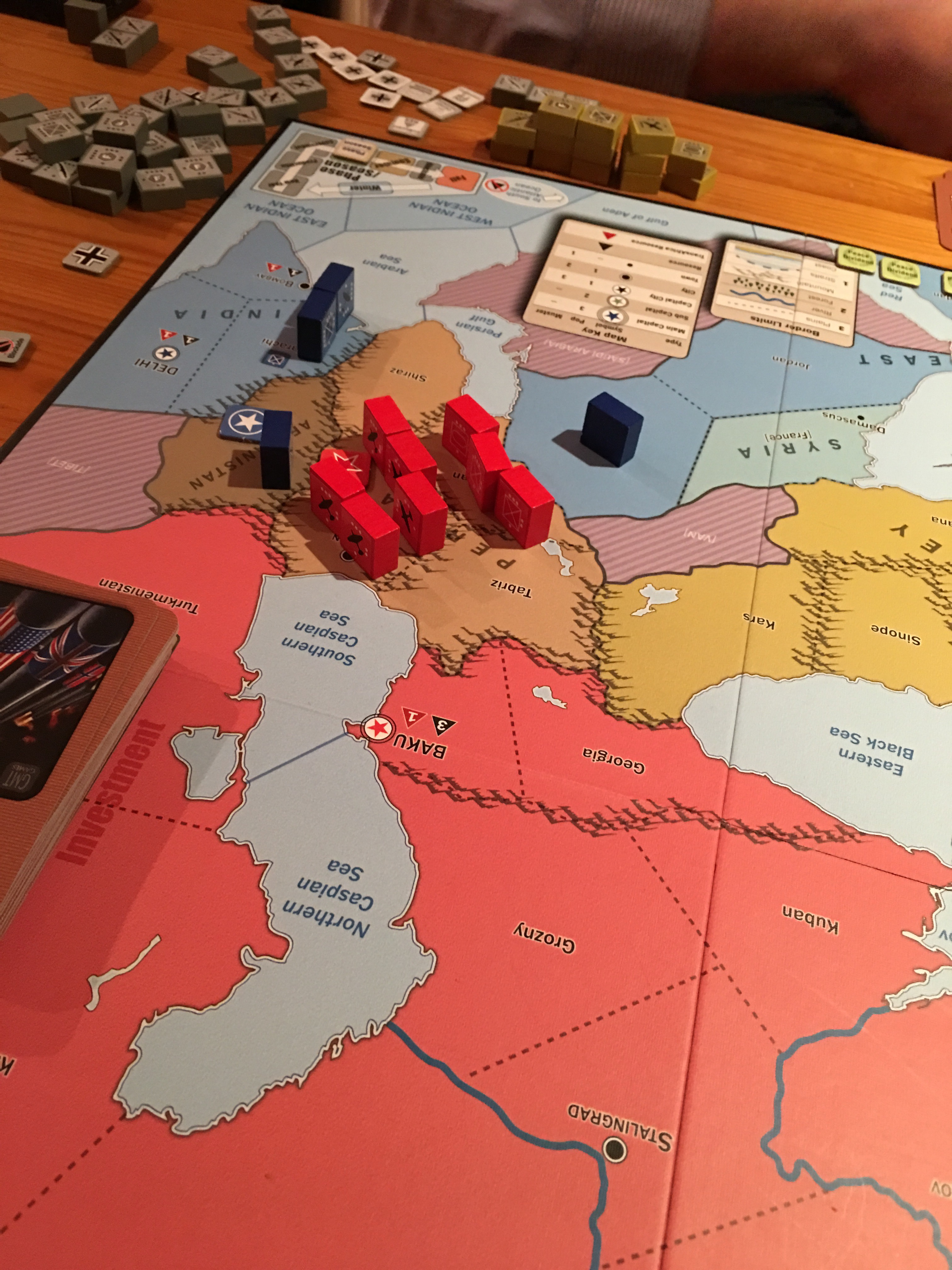
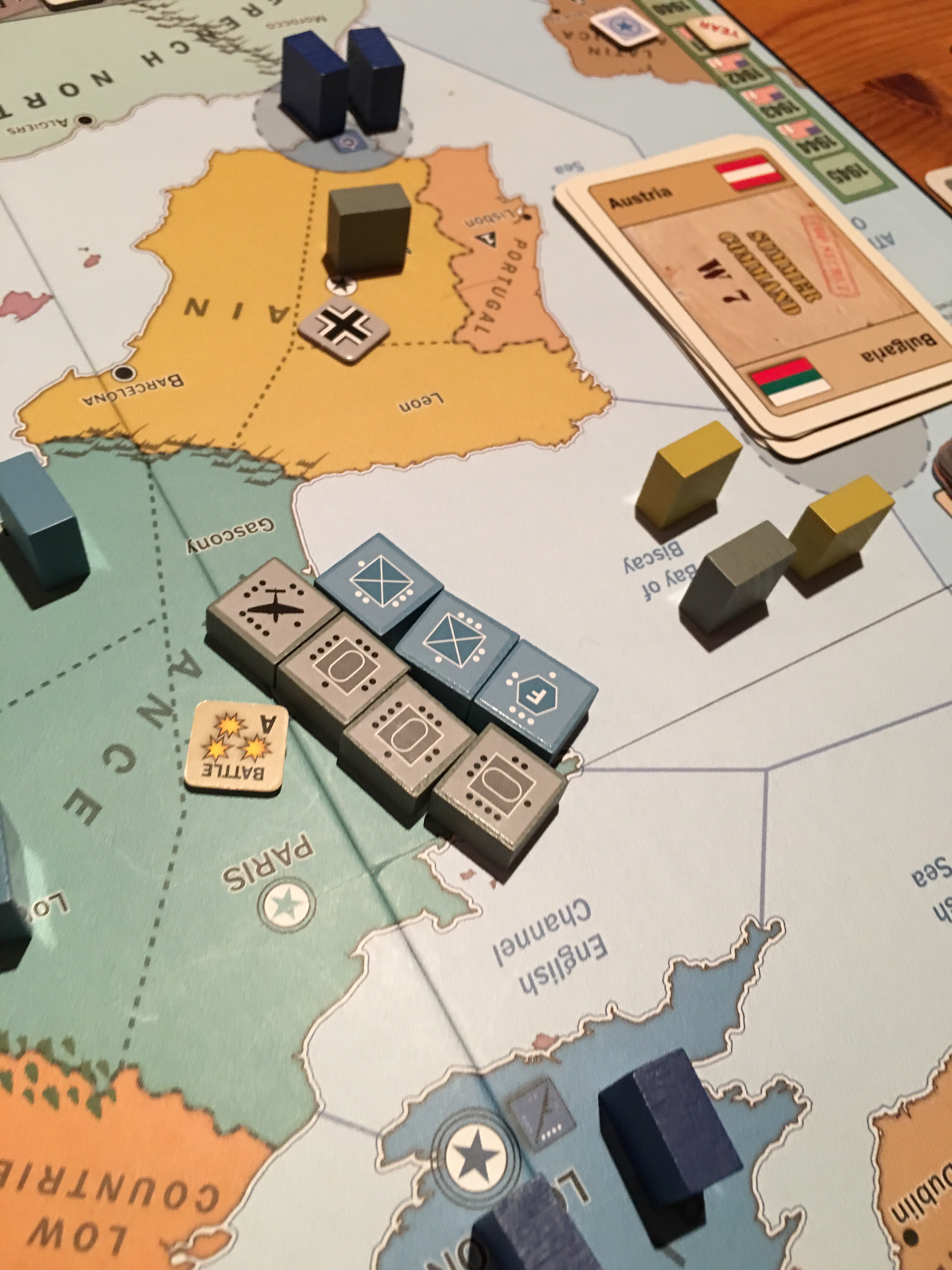
Now the meat and potatoes. The map is covered in little wooden rectangles with a sticker on one side facing YOU. So only you get to see what your forces are. Likewise you don’t know what you’re facing into apart from the number of little rectangles which could be infantry, armor, planes, fortresses, subs, aircraft carriers or ships. Each unit can be from strength one to three and units have a sort of rock paper lizard Spock advantage depending on what they are attacking or defending from.  
There are three movement phases per turn spring, summer and fall (four if your the Russians) and you get to move between four and nine units according to the card you play. The cards are marked as either spring, summer or fall and can only be used in that phase. cards also have a priority so a knowing when to go first or when to defend then counter attack later in the phase or season will win battles. 


I won’t get into the combat elements they’re pretty straightforward and dice based. More when I talk of this game again. 
This game has so many clever mechanics and the theme is so strong. Attack a neutral country will cause outrage giving your opponents a few bonus action cards, attack another nation and production capacities swap to a war footing (plus some outrage), stay peaceful and you can gain bonus prestige points which count at the end. Best of luck staying peaceful. 
The whole game is beautifully poised from the get go. You need to expand to win (pretty much) but jumping in too soon or too late spells disaster. Messing up people’s plans is so much fun. In the game I played as Russia I spent a fair amount of time trying to subvert Spain and Portugal to my side thus giving me a base behind allied lines. These multiple headaches you have to deal with and can cause reminds me of Twilight Struggle. To a certain extent this is a three player twilight Struggle without the events. 
Even though it’s a long game time will fly by. It’s incredibly engrossing. There is little downtime as every action needs to be watched. 


It’s early days for me with this game. We didn’t get to finish the whole thing but by Cthulhu’s fleshy beard this game is a humdinger. I went to bed thinking about it, wondering about strategies and all the next day. Seeing if it’s available on VASSAL (it is) and wondering if I need to buy my own copy (I don’t). Triumph and Tragedy has already become my favorite game of the year and it was up against the mighty New Angeles (apples and oranges). You’ll hear a lot more about this game in coming posts. You have been warned 
Huzzah!
Vic 

Diplomacy 2017

It’s about that time of year again, the weather is improving, there’s a grand stretch in the evenings, people are planning holidays, the general mood is happier.  Time to stab each other in the back.

Once again Knavecon is going to run an email game of Diplomacy for those who think they’re real gamers.   Seven souls will enter and none will ever be the same again.

Orders will be required once a week, normal terms and conditions apply.  This is open to anyone in the world with email.  your commitment is to send in orders once a week without fail.  if you’re new to the game contact me and I’ll run through it with you

So the question is… who’s game?

Vic

Dicing with DEATH

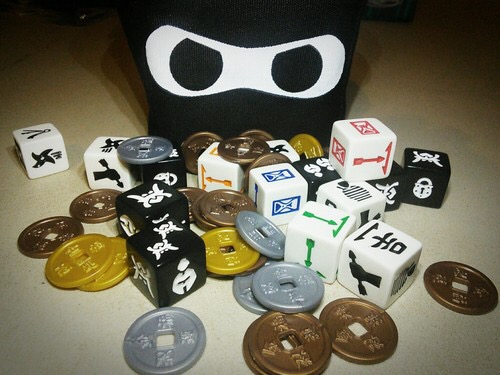
Standing out like a clown at a wake is probably not the cleverest move if you’re trying to assassinate someone. Ninjas didn’t wear black. They blended in. Ninja dice comes in a magnificent little cloth bag that looks like a cartoony ninja head. It’s black. This isn’t meant to be historically accurate 
Ninja dice is like a Zombie Dice plus or maybe Art of War. It’s a simple little Yahtzee style game with neat components and if you got the Kickstarter a number of extra optional layers. 
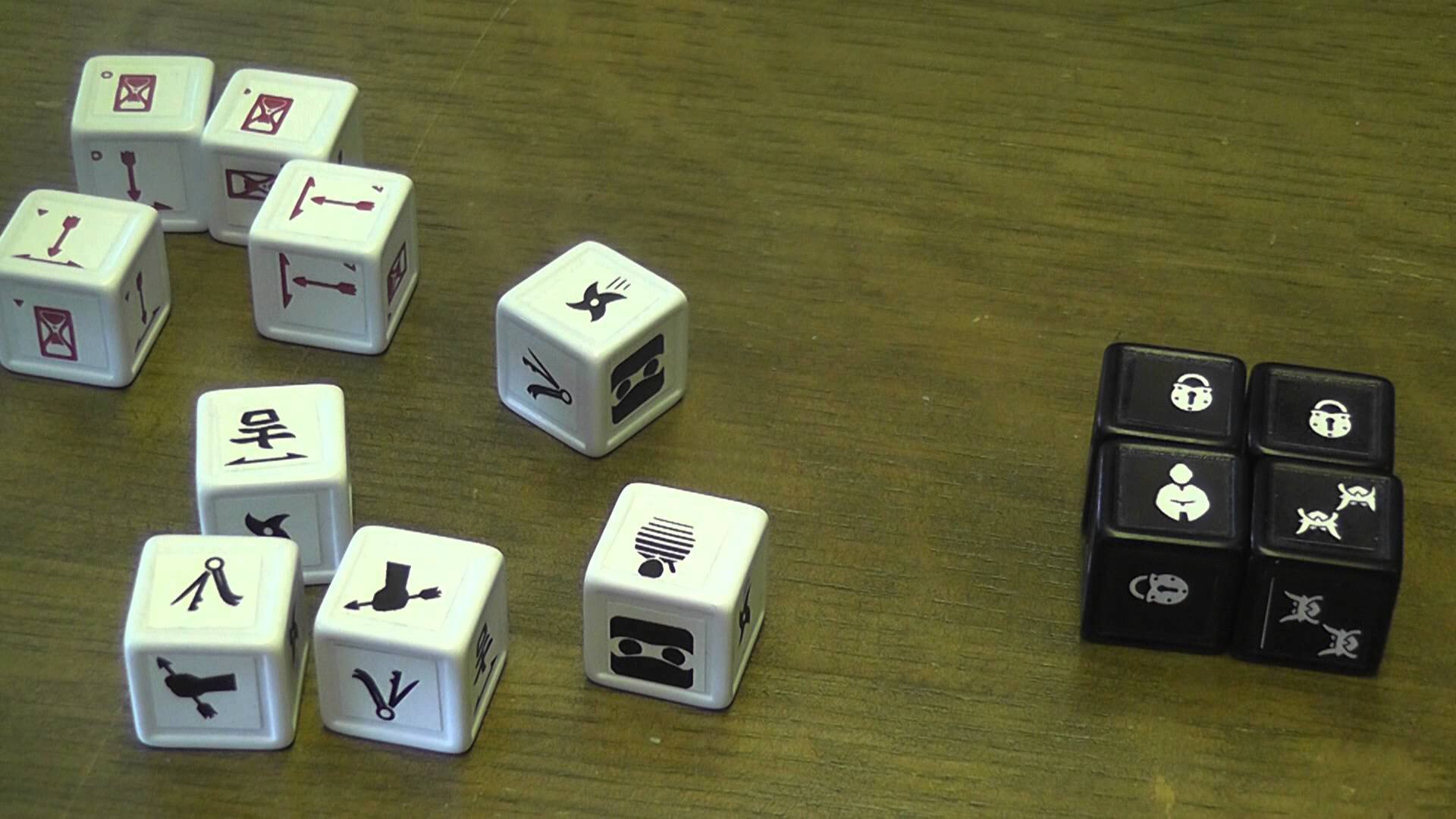
The theme is lovely. Players take it in turns to burgle a house. To do this another player rolls a set of house dice which provide a challenge in the shape of guards, locks and citizens. The active ninja must now roll their skill dice and get lock picks (overcome locks), shuriken (take out guards or citizens), sneak (slip by guards and citizens in a more honorable way), catch arrows ,wildcard and a multiplier. It’s simple stuff. 


At the same time the other ninjas throw their counter dice which will fire coin stealing arrows (direction is important) and possibly egg timers. 
The active ninja can reroll chosen dice or cut their loses and quit the building taking a minor reward. If the opposing ninjas roll enough egg timers it’s mission over and the ninja gets NOTHING as if he stole fizzing lifting drinks. So it’s a push your luck game. 
If the active ninja beats the house they score some bonus money and the ninja tags out to the next player. Rinse and repeat for each player. Once a full round of this happens an extra dice is added to the house roll making burglary a more daunting prospect. 


Three rounds of this and it’s count your money and richest ninja wins. 
Is it any good? Well it’s not bad. It’s pretty. It’s pure filler and kids will like it. It’s quick. It’s simple. The bag it comes in is magnificent. The extras add a little bit more complexity and diversity. It’s cheap. 
If you haven’t played a game like this it’s definitely one of the better ones. If you have then you may have seen it all before. Except for the bag it comes in which is ninja sweet 
Huzzah!
Vic 
More Conan

Hither can Conan, not very quickly it must be said, he was a right moody bugger. 
I played Conan the strategy game a long time back. I even had my own copy but it never really took with the group I gamed with. A contributor to this in fairness was not figuring out a number of rules at the time and the game dragging on and on. I wanted to like the game and it did tickle the back of my mind to play it again. 


So fresh slate a number of years later and one of the guys buys the base game plus the expansion. It was destiny. 
Conan the strategy game is a fairly complex affair. Preconceived notions of dudes on a map rules long reinforced have to be left at the door when you crank this baby up. 
The first thing to note is this is not really all about Conan it’s about the conquests of the four nations in the land he inhabits. The big guy is in there for sure but in typical Conan fashion he really doesn’t give a damn about your problems he’s off doing his own thing. More precisely stomping around the map kicking ass and taking names (and women). Players bid for “control” of Conan and can nudge him in various directions with the promise of riches, glory and women. If he winds up assisting in a battle on your side he acts like a veritable wrecking ball, massively increasing your offense. Getting control of Conan also gives you influence chits of different types that can be used for scoring later in the game. 


While Conan is off doing his thing you’re trying to gain influence on the map by sending out your emissaries and soldiers. These have the hard task of winning over and conquesting regions of various toughnesses. Every region is like Mordor , one does not simple walk in to it. Each of the 30 or so spots have to be fought for by attrition every time. It’s a slow process. The games tend to be as much a contest between the map and the player as between the players themselves. That’s ok, every conquest game doesn’t need to be Risk. Conquesting lands gives you victory points. Winning them over with emissaries gives you money at the end of the round which can be used to buy more units and cards. 
There’s a stack of cards, some one off advantages, some stay on the table effects that have to be paid for to recharge. Cards are used to kick off region specific events if Conan is nearby, gain advantages in certain region types, aid in combat, influence Conan in the bidding phase. They’re multi functional. Each of the nations has a little bit of variety which will take several games to suss out. Nothing massive it must be noted they’re all still fairly generic. This is not Forbidden Stars. 
One of the complaints of the base game was Conan only played a minor part. I’ll be honest I had no issue with that. The expansion adds a whole leveling up affair with Conan going from young Conan to the more powerful Conan the mercenary to the trouble browed King Conan. Spy’s which allow rerolls make an appearance. New Conan side adventure cards come in to play each round along with a stack of additional rules to an already rule heavy game. 


The game doesn’t need an expansion. It adds a lot of extra rituals per turn that slows down the whole affair. There’s already enough superfluous actions and rules in the base game without heaping more on it. I like Tsuro. I don’t like Tsuro of the sea. The extra effort moving sea monsters doesn’t add enough to the game to make it worth the effort. I feel the same way about the Conan expansion. 
Conan is not a bad game it’s just not a great game. It’s over engineered and the hard slog against the game itself makes it quite a solitaire affair. This is quite the sin for a conquest game. During a game you rarely feel threatened by other players. You know they’re so invested with their own treacle swims they don’t have the resources or inclination to attack you. Truth be told there’s no real advantage to attacking other players really. When a player has armies on your border you should be afraid it’s a convention universally accepted. Not so here. 
And yet. There’s something about the game I like. I can’t put my finger on it. It’s beautifully presented. It’s nicely themed and I find myself cheering for the game which never quite hits the high notes. I’m going to have to play it again. This time without the expansion. A number of games in I still don’t fully know what I think about it. It’s different it’s complex it’s galling. It needs a touch of magic sauce to make it amazing and maybe that sauce is learning the game better. 
Huzzah!
Vic 
Create a free website or blog at WordPress.com.

Up ↑